Are you a parent looking for strategies to help your child with autism? As a mother of four, one of which is on the autism spectrum, I rely on strategies every day to help not only my child with autism but with parenting all of my children. Read on for my top 7 strategies that will help every parent, whether their children have autism or are neurotypical.
Neurotypical: a word to describe people who do not have autism. For explanations of more autism-related terminology, click the button below.
Table Of Contents
Visual Timetable
Routine can make all children, both with autism and neurotypical, feel comfortable, reassured and content. Although children without autism (neurotypical children) may be happier at times to “go with the flow” structure is far more important for the peace of mind of children with autism.
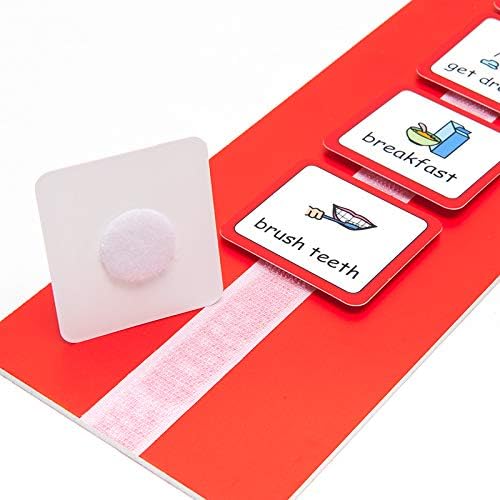
A visual timetable helps children to see at a glance what is coming up for them during their day and therefore feel far less anxious. A visual timetable can include basic daily activities such as getting up, getting dressed and cleaning their teeth. It s also an excellent device for explaining changes to routine in advance and preparing your child for new things.
By using a visual timetable with cards stuck on with velcro that can be moved around easily, not only can the timetable be adjusted to reflect changes in your day, but your child can become involved in planning out their day too.
Countdown to the end of an activity
For both ASD and neurotypical children, ending an activity in which they are engrossed can easily lead to a tantrum or meltdown. One way to avoid this upset is to use a countdown to the end of an activity. This method helps to prepare your child for an activity ending and can help them transition to what needs to happen next.
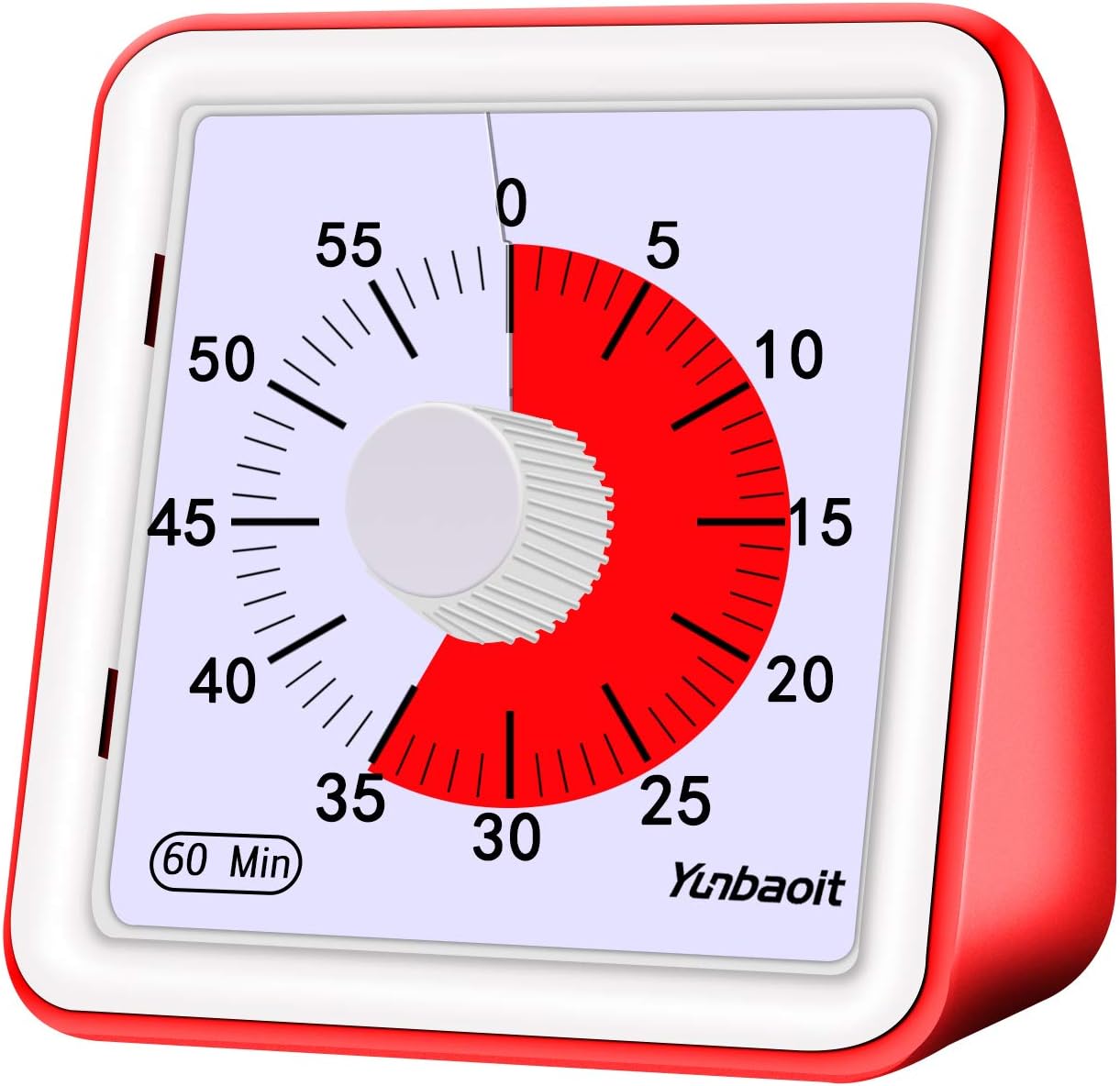
A Time Timer is an ideal way to represent how much time is left before the end of an activity. It has a visual representation of how much time is left alongside the numbers, allowing both children who respond well to numbers and those who cannot yet identify them to understand it.
The Time Timer can be used to signify the end of numerous activities, including but not limited to; playtime before clearing away, meal times, television time, reading time, homework time and more.
First This Then That
“First this then that” is a concept that carries on from visual timetables and transitioning from activities as mentioned above. This can also be explained as “now and next” or even taken as far as “now, next and later”.
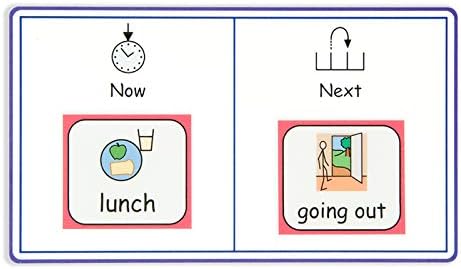
By explaining to a child what they are doing now then what they will be doing next before you give them a countdown warning that they will need to change activity, they are less likely to become upset as they will understand fully what is going on. It can also be beneficial to use “First this then that” when asking children to participate in activities that they are less than enthusiastic about.
For example;
First: homework Then: playtime
Don’t ask questions
As I explained in my post Why You Shouldn’t Ask Your Kids Questions & What To Do Instead, asking kids questions, whether they are neurotypical or otherwise, is often not the best means of getting them to communicate with you. Children with autism struggle more than most with social situations and cues, so asking questions can often leave your child not knowing what sort of response that you expect.
For example, how often have you asked your child “What did you do in school today?”, only to be met with “nothing” or “I don’t know”?
By replacing questions with statements, you are modelling the sort of response that you expect.
Rather than asking;
“What did you have for lunch today?”
try
“I had a sandwich for lunch today”.
It is far more likely that your child will model your sentence and respond with “I had pasta for lunch today” to the statement than the silence that would normally meet a question.
Click the button below to learn more about this strategy.
Offer 2 alternatives, not a full choice
For children with autism, (and for all children in my experience), too much choice can be overwhelming. Rather than giving unlimited options that your child must think of by themselves, try offering either A or B only.
For example;
“Where would you like to go today?”
becomes
“Would you like to go to soft play or the park?”
The “either-or” second option not only removes the overwhelm, but also avoids the meltdowns that can occur when your child chooses an infeasible choice in response to the first question.
Tell what “to do”, not what “not to do”
Again, this strategy is one that works fantastically well for parenting all children, not just those with ASD.
As discussed in my post How To Get Your Kids To Do What You Ask Them To, children will often fail to hear the “not” in a sentence.
If you say;
“Don’t spill the drink”
all your child will hear and visualise is spilling the drink. As this is what they are picturing, this is what is more than likely to happen.
If, however, you say;
“Keep the drink in the cup”
that is what your child will visualise and the desired outcome is far more likely to happen. Click the button below to learn more.
Avoid excessive unnecessary language with instructions
Keeping your language clear, basic and at an appropriate level for your child’s level of understanding is crucial for ensuring that your instructions are understood by all children. For children with autism, who are even less likely to pick up social cues such as facial expressions, gesture, tone and humour, keeping instructions uncluttered by long words is even more important.
Imagine being in a foreign country where your understanding of the language is basic. While you may be able to understand the basic sentence structures used in a classroom, you are far less likely to understand the gist of what a local who is fluent in the language is saying. Keep this in mind when giving instructions to your child.
I hope that those strategies help you, not only with your children on the spectrum but with all of your children. Learning these strategies has certainly made parenting all four of my children far easier.
Where to go next
Fancy Getting Your Hands On My Ultimate Mum Bundle Resource?
Why Not Pin This For Later?