

Let me guess, you’ve heard that journalling can be good for improving mental health, but you don’t know how you should be journalling, what you’ll really get out of it or where to start?
If you have seen any of my recent morning routine videos or day in the life videos you’ll know that I practice journalling each day to help to achieve my goals, declutter my mind, improve my mood and overall mental health. I am now going to share with you exactly how to get started, plus some prompt ideas to get you going on your journalling journey.
ad disclosure – this post may contain affiliate links
Table Of Contents
Let Me Start By Saying
There are no hard and fast rules when it comes to journalling. There is no right or wrong way to do it so please don’t take anything I’m saying too literally. This is more like a variety of ideas that you can use, a menu if you like, so pick a choose the things you think will work for you.
Don’t forget if we go through the options let me know if you’ve tried any of them before or if you’re going to be trying them out for a while. hare any experience you have in the comments so that we can all help each other.
Choose Your Journal & Pens
Choose a journal and pen that you love. It doesn’t have to be “perfect” as so many people procrastinate starting something like journalling until they have the “exact right stuff”. Don’t overthink it, just choose something you are drawn to. If you find your stationery appealing, you will be more include to write in your journal.

If messy mistakes stress you out, think about using erasable pens.

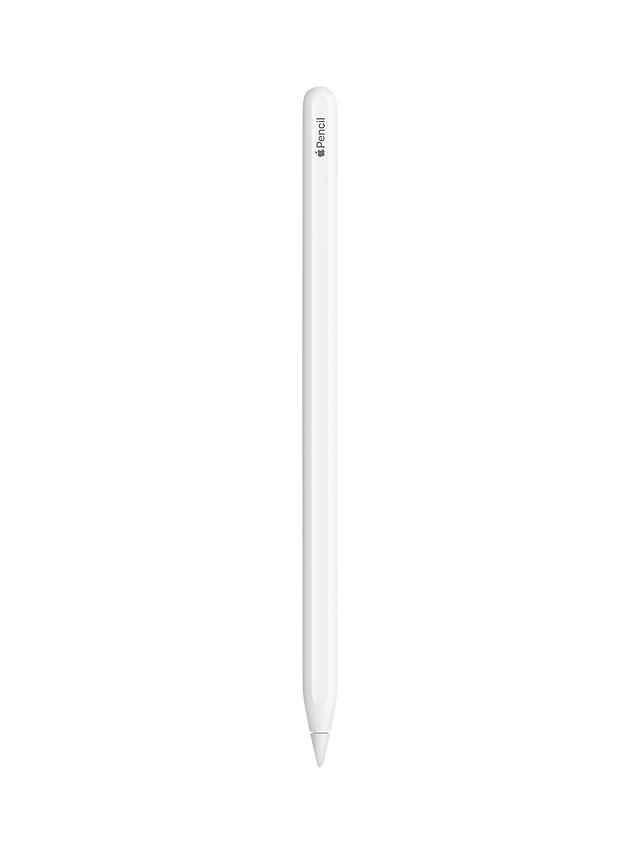
If tech is your thing, think about journalling on an iPad or other tablet. I’d highly recommend actually writing with a stylus or Apple Pencil rather than typing though, as there is something about putting (real or digital) pen to paper and actually writing the words that helps you to untangle your thoughts more then punching letters into a keyboard.
Magic Keyboard

Apple Pencil
Think About What You Would like to up level or improve in your life
Now we have decided where we’re going to do our writing for our journalling, now we’re going to think about what the focus of our journalling will be.
What do you want to improve in your life? Is there a goal you want to achieve? Is there something that isn’t quite in flow? Isn’t going well? A struggle you’re facing?
It’s good to have in your mind what you’re going to want to get out of the journalling process.
Would you like to declutter your brain? Achieve goals that you have always fancied achieving? Is it sticking with habits that you struggle with? Or maybe it’s anxiety that plagues you and holds you back? Whatever you identify as the “thing” that is currently out of alignment in your life, keep that front of mind as we talk about how you will start journalling. I’m going to offer you a menu of journalling options, pick the ones that will best help you deal with what you have in your life right now.
Just start, it doesn’t have to be perfect.
Brain Dump
Now onto what we are actually going to write when we are journalling. The first way we can journal (and this is a good place to start if you’re right at the beginning of your journalling journey) is simply to brain dump.
It doesn’t have to be in full sentences, it can be in spider diagrams, sketches whatever it might be. Just get your thoughts down on the page.
This can be a really good thing to do before bed even if it’s in the form of a list for the next morning. Whatever is on your mind, if you can get it out of your mind and onto the page, often we can feel a lot more calm and serene, not worrying that we are going to forget things.
Morning pages
Now if you want to level up your brain dump to the next stage, you can try something called morning pages.I was first introduced to morning pages by a creator called Amy Landino.

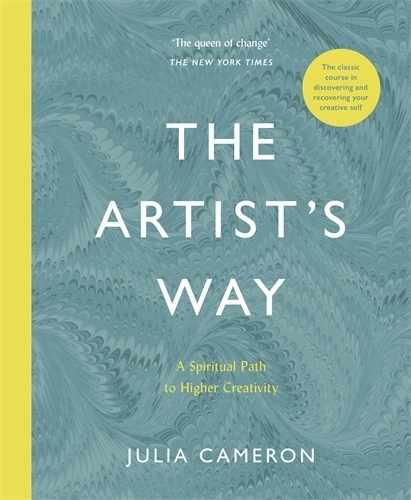
Morning pages are a concept talked about by Julia Cameron in her book “The Artist’s Way”. They are 3 pages of whatever is in your brain the the form of a complete stream of consciousness. Some mornings it’s mostly gibberish, yet other days some really good ideas can come out of them. Do morning pages first thing in the morning and do not edit what you write.
Process Stress
One way in which journalling can be really useful for dealing with anxieties, stresses and worries.
To complete this exercise all you need to do is to write down what is worrying you and then you need to take a pen and cross it all out. Next you need to write down all the reasons why this worry is really not as big of a problem as you’re making it in your head.
If you think of humans as we have evolved back when we were in caves at the risk of being hunted by animals, starvation and other very real dangers, we had a lot of fight or flight instinct programmed into our brains.
A level of fear is still healthy even in this day and age to stop us doing ridiculous things that may endanger our lives.
However some things that previously may have put our lives at risk thousands of years ago are no longer a real risk when they happen today. However, we still feel that instinctual fear even now when no real danger exists.
For example, long ago, the prospect of being ostracised from the group would mean that we would have to go and live alone in the wilderness, then probably starve and die.
Write your fears and worries, then cross them out (realise how ridiculous things are that may seem “real” in your head).
10 Life Goals
The next way that you can use journalling is to write out your goals as if they have already happened. This may sound a bit “woo woo”, but stay with me here.
Imagine a time when you’ve been thinking about buying a new car and then suddenly wherever you go you see that car on the road. You haven’t really spotted that model before, but now they’re everywhere.
Is this a new trend where suddenly this car has resurfaced out of nowhere? Probably not!
Chances are it’s just your brain suddenly picking up on something that you have got in your subconscious. In this case, the car you are thinking of buying.
By writing out your goals as if they have already happened, you’re tricking your subconscious to look for ways to help you achieve your goals, even when you’re not actively thinking about them.
You can choose a set number of goals. Rachel Hollis often talks about writing 10 specific life goals every day as if they’ve already happened.


There are lots and lots of business specialist that say that the difference between a millionaire and a billionaire, is that a millionaire writes their goals once a day and a billionaire does it twice.
The more that we write out our goals, the more we keep them in focus in the front of our minds and the more likely we are to achieve them.
Some Examples Of Goals That You Could Choose To Write
I’m going to share some of the things that I write down each time I do my daily journalling in order to perhaps give you some ideas.
Now the first one was actually an idea given to me by my blogger friend Katy from Katy What Katy Said.
Katy said that one of the things that she writes down every day as “I am an exceptional wife and mother”. She told me that she didn’t necessarily believe that in herself in that moment when she started writing it, but it was what she wanted to achieve.
That’s absolutely the mindset that we have to have behind this writing and goal setting style of journalling.
By writing “I am an exceptional wife and mother” every single day that is what I’m trying to achieve. Some days I get a bit closer to that than others, then there are other days where I fall short. Every day I’m still going to keep writing this to hopefully trick my subconscious into achieving it.
Other examples could include;
If your finances are getting you down, write “I am debt free and mortgage clear”
If you are overwhelmed with housework, write “My home is neat and tidy and a lovely place to be”
If you are snowed under with keeping on top of general Mum life, write “I am organised and calm”
Before I had covid I used to write “I am fit and healthy” each day. While I was ill and for weeks afterwards I felt so drained of energy and generally struggled to complete day to day tasks.
After this experience I added “I am fit, healthy and energetic” as I never wanted to feel that way again.
Write What You Do Want, Not What You Do Not Want
What it’s really important to remember when you’re journalling is to write what you do want not what you do not want.
Unless, of course, you are going to cross out what you do not want and rewrite it as what you do want.
By saying “I don’t want to be in debt” your subconscious brain won’t hear that you “don’t want” and will just focus on the “being in debt”.
By writing “we are debt free” as opposed to “do not want to be in debt” or “we have abundant income and abundant savings” then you are focusing on joyous feeling of having that abundance rather than the dragging down feeling of being in debt.
Future Scripting
Another way in which you can journal is future scripting. This is similar to the “10 things” we talked about, but can be written in other ways.
Consider writing a day in the life of how your life will be when you are your most improved future self. Think about how you will feel when you get up in the morning, which clothes you will wear, how your home will look, which people you will be surrounded with. Most importantly, write how all of this will make you feel. Remember to write this as if it is already happening.
Celebrate Your Wins
A really great way to journal is to write down your wins for the day and the things that you are grateful for.
They don’t have to be the big big things they can be very small things, such as;
- your child coming to give you a hug unexpectedly
- someone letting you out at the junction when you are stuck in loads of traffic
- someone holding a lift for you when you were rushing.
Anything that happened through your day for which you are grateful in your journal to reinforce that actually life is pretty good. This really does help to lift our moods and focus our energy on what’s good in our lives rather than all the negative things.
Rewrite Your Day
If you had a bad day, one way that you can journal is to rewrite your day. You can imagine how your day would have gone if all of the tricky and upsetting things had gone a bit better. This will help to reprogram your brain to expect better tomorrow.
So rather than;
“I got out of bed and stubbed my toe and then argued with my husband”
You could write;
“I woke up feeling energised and refreshed, then spent quality time with my family”.
Rewrite what you wish had happened in order to make your day more likely to go in a positive way tomorrow.
Writing To Explore An Issue
You can use journalling to explore an issue you are facing. Maybe it’s a decision you are struggling to make, an idea you have or a problem you are faced with.
Either write in a stream of consciousness or try spider diagrams to untangle the issue from your brain down on paper. This is a great way to look for possible solutions in your life.
Important Point
Journaling is an amazing tool for better mental health, but I feel it is important to point out at this stage that not all issues can be tackled alone. If you are really struggling with depression, anxiety or another mental health issue, please take this as your sign that it is time to talk to someone about it.
Writing A Letter
The next type of journaling that you can try is writing a letter. This could be a letter from your present self to your past or future self. This could be from your future self to your present self, thanking you for all you did to make your future life so great.
It could be a letter to another person (one that you are not going to mail). It could be thanking someone or even forgiving someone who had wronged you.
Remember that forgiveness does not necessarily mean that you have to let that person back into your life, just that you are able to let go of the anger and resentment and to move on.
Tackle Limiting Beliefs
What are your limiting beliefs? The things that you are conditioned to believe (often from childhood) that are not even true.
Did your parents start multiple small businesses and fail, leaving you to subconsciously believe that all businesses fail?
Did someone once remark on your weight so now you are conditioned to hate your body?
Call out these limiting beliefs on the page, write down where they came from and why they are wrong, Then cross them out and rewrite them as a new positive affirmation.
For example;
“My business venture is successful.”
“My body is healthy and beautiful.”
Biggest Worries & “What If”
What are you really worried about? What do you think might happen if you strive for your dreams? Are you worried people will laugh? Stop speaking to you?
Write down your deepest fears and again and think;
- How likely is this real to happen?
- Could I survive it?
- What WILL happen instead?
Calling out our biggest fears like this always makes them less scary.
Which Of The Journalling Ideas Appeal To You?
Let me know in the comments which of these journalling ideas you have tried and which you are going to try out next.
Why Not Pin This For Later?

