

New Year’s resolutions feel so serious, don’t they? They sound like something set in stone — and that’s where the problem starts. Resolutions feel rigid and unforgiving, which doesn’t suit the flexible, creative, ever-changing nature of an ADHD brain.
Another issue is that resolutions often focus on big, long-term changes without any immediate pay-off. ADHD brains thrive on dopamine (the feel-good chemical) from small wins, not far-off, long-term rewards. If it’s boring or too far away, our brains just… switch off.
That’s why instead of New Year’s resolutions, I recommend focusing on goals instead. Goals are flexible, personal, and — most importantly — achievable. Even better, I like to break my goals down into monthly goals instead of yearly goals. This makes them smaller, more manageable, and gives you 12 fresh starts throughout the year.
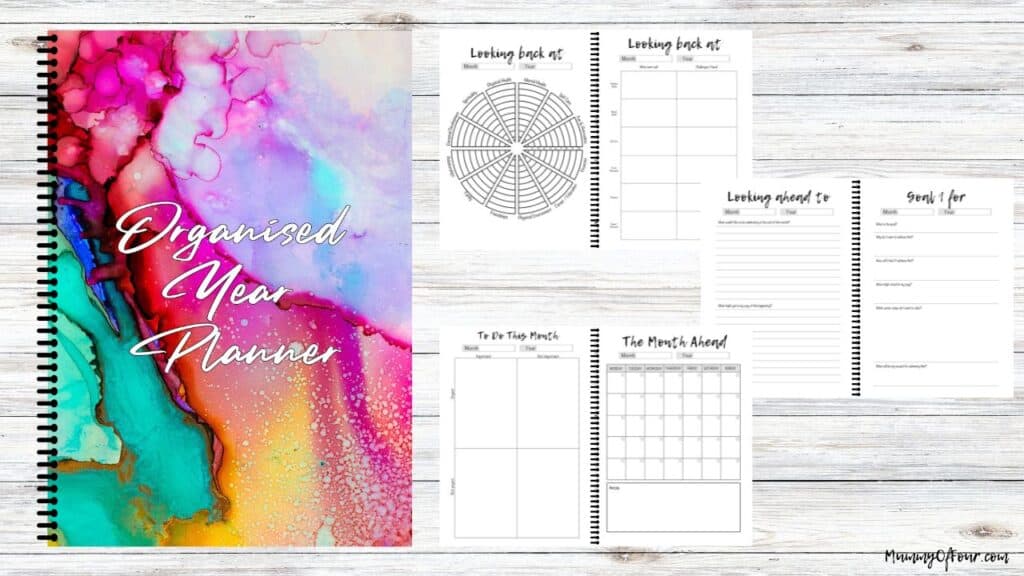
If you like the idea of monthly goal setting, I’ve created the Organised Year Planner to help you do exactly that. It’s a printable tool where you can break down your big goals into monthly targets, track progress, and celebrate your wins — all in a way that works for an ADHD brain.
Table Of Contents
Shop The Organised Year Planner
How To Stick To Your Goals When You Have ADHD
Here’s my step-by-step approach to setting goals you’ll actually stick to, even if ADHD is doing its best to throw you off course.
Get Clear On What You Really Want
The first step is to figure out what you actually want, not what you think you should want. Social media has a sneaky way of making us chase other people’s goals.
Ask yourself:
- What would make me feel proud at the end of this month?
- What’s one thing I could achieve that would make my life easier, calmer, or happier?
ADHDers are known for chasing shiny ideas and jumping on trends. So take a moment to pause and reflect on what you really want.
Be Realistic & Honest About Capacity
ADHD brains are notorious for underestimating time and overestimating energy. I get it — I do it too! But if your goal is too big, you’ll lose interest or burn out. Instead, aim for a “minimum viable goal.”
What’s the smallest version of your goal that would still feel like a win?
For example, instead of “write a book,” the goal might be “write for 10 minutes, 3x a week.”
Break It Down Into Bite-Sized Action Steps
One of the biggest ADHD traps is setting a big, vague goal like “get healthy” or “be more organised” without any idea of how to get there. Big goals feel overwhelming, so break them into smaller, trackable steps.
Here’s how I do it:
- Break down the goal into micro-steps.
- Write those micro-steps in a checklist (ADHD brains love ticking things off).
- Use my Organised Year Planner to track your steps month by month.
The more specific and small your steps are, the easier it is to start. Plus, every time you tick something off, you get a hit of dopamine, which is exactly what an ADHD brain needs to stay on track.
Make It Fun
If it’s boring, it’s not happening. ADHD brains need novelty, fun, and a bit of playfulness to stay engaged. So, turn your goals into a game.
Here’s how you can make goals more fun:
- Turn them into a challenge (like a “7-day streak” for your goal).
- Use fun, playful language (e.g., “Body Blitz” instead of “workout”).
- Race against the clock (like a 30-minute power hour).
Your ADHD brain will respond better to a challenge, game, or friendly competition than a dull, rigid plan.
Create Accountability Systems
ADHDers are brilliant at keeping promises to other people but not so great at keeping them to ourselves. So, use that to your advantage.
Get an accountability buddy, join a co-working session, or share your goals publicly. Accountability creates external pressure, which ADHD brains respond to.
Want extra support? My Patreon community is a great way to get accountability, encouragement, and access to goal-setting tools like my Organised Year Planner.
Identify What Could Stand In Your Way
Sometimes it’s not the goals that fail — it’s the obstacles we didn’t see coming. ADHDers often face “invisible barriers” like decision fatigue, overwhelm, or sensory distractions.
Here’s how to spot (and overcome) the most common ADHD obstacles:
- Overwhelm: Break it down into smaller steps.
- Forgetfulness: Use visual trackers like my Organised Year Planner or phone notifications.
- Distraction: Remove distractions, use timers, and stay in “power hour” mode.
- Loss of interest: Switch up your approach or turn it into a game.
Before you start your goal, ask yourself: “What’s the first thing that could stop me from doing this?” Then, make a plan for it.
Reward Yourself Along The Way
ADHD brains need instant rewards, not “I’ll feel good in six months.” So don’t wait for a “big result” to celebrate.
Here’s how to build in rewards:
- Set milestone goals and reward yourself when you hit them.
- Small wins = small treats. (It could be a bath bomb, a scroll break, or a fancy coffee.)
- Track progress in the Organised Year Planner, so you see how far you’ve come.
If you’re tracking goals visually, you’ll see all your progress right in front of you, which will feel just as good as that dopamine hit.
Lean Into Your ADHD Superpowers
ADHD isn’t all bad. In fact, it comes with some incredible superpowers like:
- Hyperfocus: Once you’re “in the zone,” you can get more done in an hour than most people do in a day.
- Quick adaptation: ADHDers can pivot and problem-solve faster than most.
- Pattern recognition: You can spot patterns and solutions that others miss.
Use these superpowers to your advantage. Lean into your strengths instead of focusing on what’s “wrong” with you.
Celebrate Progress, Not Perfection
If you’ve got ADHD, you’ve probably experienced the “all-or-nothing” mindset. But perfect progress is a myth. Small wins add up.
Here’s what I do:
- Look back at my Organised Year Planner and see how far I’ve come.
- Remind myself that “done is better than perfect.”
- Stop aiming for a “perfect month” — aim for progress.
You don’t need perfection. You just need progress.
Some Thoughts
If you have ADHD, sticking to New Year’s resolutions is hard, but you can stick to goals. The trick is to make them ADHD-friendly.
Here’s the ADHD goal-setting system in a nutshell:
- Forget New Year’s resolutions — set monthly goals instead.
- Break big goals into smaller steps.
- Make it fun.
- Track progress in the Organised Year Planner.
- Celebrate small wins.
The Organised Year Planner is my secret weapon. It keeps my goals visible, trackable, and — most importantly — achievable. If you’d like to get your hands on one, you can grab your own copy and start setting ADHD-friendly goals today.
If this guide gave you a lightbulb moment, I’d love to hear from you. Drop me a message or share your goals using the Organised Year Planner — and I might just give you a shoutout in a future episode.
Here’s to progress, not perfection. Let’s make this your most successful goal-setting year yet.
Get My Free Ultimate Mum Bundle Now
Join my email club and get your hands on my free “Ultimate Mum Bundle” of organisation printables.

Join Me In Patreon

