
Before I had William, and even during the first few years of his life, I didn’t truly understand autism. I was naive and thought autism only meant a child was completely non-verbal or had very obvious challenges. My understanding was limited to stereotypes and misconceptions. It wasn’t until William came along that I started to see just how diverse the autism spectrum really is. He taught me that autism can look very different from what I expected, and that understanding it requires seeing the world from a new perspective.
When I look back on my journey with my second child, William, I see a path full of moments that were confusing, exhausting, and, ultimately, incredibly enlightening. Parenting is always full of challenges, but for me, navigating William’s journey through autism has been about learning to understand his unique perspective and needs, and how to support him in a world that often doesn’t make allowances for those who see it differently.
When I look back on my journey with my second child, William, I see a path full of moments that were confusing, exhausting, and, ultimately, incredibly enlightening. Parenting is always full of challenges, but for me, navigating William’s journey through autism has been about learning to understand his unique perspective and needs, and how to support him in a world that often doesn’t make allowances for those who see it differently.
Table Of Contents
Early Signs and Concerns
William was my second child, and when he was very young, he was, in so many ways, a joyful and happy little boy. He loved routines, smiled often, and seemed content—especially when he was with me. Yet, from early on, there were things that made William just a little bit different. These weren’t obvious right away, and some only became clear when I could look back in hindsight. As they say, hindsight is 20/20.
As an infant, William was happy and easygoing. When we started weaning, he ate everything—fruit, vegetables, different flavours. But as time went on, his eating habits narrowed until he would only eat very specific meals. He loved routine in his food, and that routine became rigid. He needed to have the exact same breakfast, lunch, and dinner every day. This rigidity extended into our family life as well. I remember taking him on holiday in a touring caravan, pre-preparing a very specific pasta dish he loved because I knew he wouldn’t eat anything else. Without it, he would have gone hungry. For William, this wasn’t about pickiness—it was about a need that went much deeper.
Some people may think, “Just offer him different food, and if he gets hungry enough, he’ll eat.” But it doesn’t work that way with autism. The anxiety that comes from changes like these can be overwhelming. It’s a rigidity that can cause real distress, and in William’s case, we learned that he simply needed what he needed.
Challenges and Quirks
Food wasn’t the only challenge. William’s strong attachment to certain items extended to his clothes and shoes, too. I remember his deep attachment to a pair of little canvas shoes—”doodles” with boats on them. He insisted on wearing them everywhere, even in the snow. Any attempt to introduce new shoes ended in meltdowns that were hard to manage. I’d end up asking the shop assistant, “Can you just bring me a bigger pair of these exact doodles, please?” And we’d have to pretend they were his old shoes, just in a bigger size. It was one of the only ways to keep him comfortable and calm.
One of the more peculiar phases I remember is William’s fear of wrapping paper. It wasn’t just the paper itself—it was anything that had touched the paper. One time, he was given a toy train as a gift, and because he saw it come out of wrapping paper, he refused to touch it, almost as if he thought it was contaminated. He was only around two years old, but he was completely terrified of it. I remember feeling both bewildered and helpless, not knowing how to reassure him.
There were other signs too—his extreme anxiety during haircuts, to the point where it took multiple people to help him stay still. At parties or playgroups, while other children were sitting and joining in with songs, William would walk laps around the room, never settling or engaging in the same way as the others.
Milestones and Giftedness
Interestingly, William was also very advanced in some areas. He could read fluently before he started school at just three years old, and he flew through his two-year developmental check. He counted everything, recited the alphabet, and ticked all the boxes with ease. But as I later learned, autism doesn’t always present with delays or deficits. Sometimes, it’s about the contrast—the way development can be spiky, with strengths in some areas and challenges in others. William’s brightness masked some of the signs that I now realise were there all along.
Because he did so well in developmental checks, no one raised any red flags. He made eye contact, he was content, and he didn’t have the stereotypical signs that many people associate with autism. As his mother, I could always anticipate his needs. He was happy at home, and he thrived on the routines I naturally established to keep our household running smoothly.
The School Years and Realisation
Things began to shift when William started school. Before he started, I had a chat with his teacher. I mentioned, almost casually, that I thought William might be “somewhere on the spectrum.” I wasn’t making a big deal of it—perhaps I was even a little bit in denial myself. A few weeks into the term, his teacher took me aside for one of those dreaded “Can I have a word?” moments. She agreed with my suspicion, and hearing her say it out loud hit me like a tonne of bricks. I spent the next 48 hours in utter denial, trying to convince myself that it wasn’t autism, that maybe he was just exceptionally bright, or that it was something else entirely.
I called the health visitor, rattling off all the reasons why it couldn’t be autism, looking for reassurance. She listened and agreed that my theories were plausible, but even then, something in my heart told me otherwise.
The Assessment Process
Eventually, I accepted that William needed an assessment. I was told the waiting list was long, and at that point, I knew I couldn’t just sit and wait. I tracked down the contact information for the consultant we’d been referred to and called every single day. I was polite but persistent, and eventually, it worked. We managed to get William assessed in record time—within a few months, instead of the long wait that many families face.
The assessment process itself was overwhelming. There were several parts—the social communication clinic, an in-depth interview with us as parents, and then an ADOS assessment that involved various play-based tests. The whole experience was intense, and I remember coming out of it with a rash all over my face—a physical manifestation of the stress I hadn’t even realised I was carrying.
The diagnosis came back as moderate autism. Even though I had suspected it, hearing it officially was hard. There was a mixture of emotions—relief that we finally had an answer, sadness at the reality of it, and a sense of validation. It wasn’t in my head. I hadn’t caused this. It was just the way William was.
Looking Back and Moving Forward
Looking back, I realise how much I have learned from William. The routines that I naturally put in place, which seemed to work so well, turned out to be exactly what he needed to thrive. Even though people accused me of making him too reliant on me, I know now that what I did was give him the stability and predictability that he needed to feel safe.
Today, William is thriving. He’s happy, he’s learning, and he’s growing in his own way. The diagnosis didn’t change who he was—it simply gave us the tools to understand him better and to support him in the ways he needed. And isn’t that what we all want as parents? To understand our children and help them flourish in a world that isn’t always designed for them.
For anyone out there who is facing similar concerns with their own child, my biggest piece of advice is to trust your instincts. If you think something is going on, don’t wait. Seek answers, ask questions, and don’t be afraid to push for what your child needs. You won’t regret looking into it, but you might regret waiting too long.
William has taught me that being different isn’t a bad thing. It’s just a different way of seeing and experiencing the world. And as his mum, I’m here to help him navigate it, every step of the way.
Get My Free Ultimate Mum Bundle Now
Join my email club and get your hands on my free “Ultimate Mum Bundle” of organisation printables.

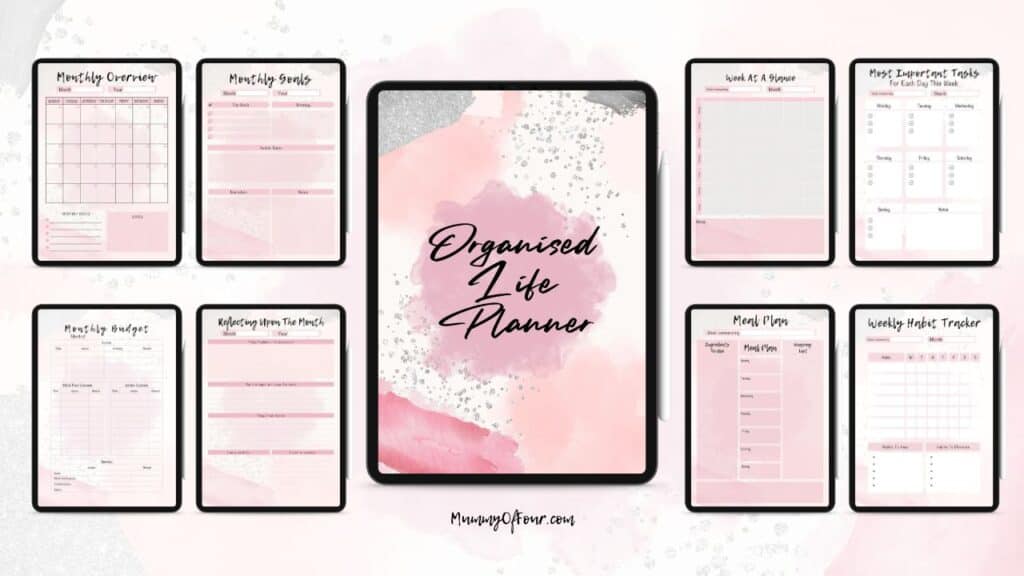
Shop The Organised Life Planner
Join Me In Patreon

Read It Next
