

Are you fed up of living in disorganised chaos? Maybe you like the idea of your home being organised but you don’t know where to start?
Today I am bringing you 17 amazing tips for not just organising your home, but keeping both your home and your life organised for good.
Table Of Contents
Declutter Before You Organise
Before you can organise your home, you will need to declutter it. With clutter everywhere you won’t be able to see the wood for the trees and will enter into an endless cycle of moving things from one pile of junk to another.

Decluttering throughly and regularly will make your home so much easier to organise and, more importantly, keep organised.
Ok, so I need to declutter, where do I start?
The purpose of decluttering is to create space in your life for the things that you love and need. I could talk all day about how to declutter, but for the purpose of this introcution to the topic, I’m going to get you to ask these questions every time you need to decide whether or not to declutter an item.
Ask yourself – Do I really love it? Do I really need it?
If the answer to at least one of these questions is not “Hell Yes“, then it’s no and whatever it is has to go.
For a full explanation of the exact steps that you need to take to declutter your entire home, check out my top decluttering tips post.
Have A Clear Surfaces Rule
When you are organising, aim to have as many clear surfaces as possible in your home. “Stuff” should be stored in cupboards, drawers and units out of sight wherever possible (more about that in a minute). The more “stuff” you have on your countertops, tables and other surfaces, the more there is for you to clean.
The other issue with having too many things on countertops is the “stuff’ will act as a clutter magnet and attract more “stuff”. If something is dumped on a clear surface it will stick out like a sore thumb, which is more likely to prompt you to tidy it away. When your surfaces are cluttered, one more piece of clutter is likely to go largely unnoticed. Soon more and more clutter will accumulate until there is no space left at all.
Identify Danger Zones
Every home will have clutter “hot spots” where things are likely to be dumped to be sorted “later” (spoiler alert, “later” rarely comes around).
These clutter danger zones are often in key areas such as near the front door, the living room, kitchen and in and around your bedroom.

Take a walk around your home and look for clutter clusters. Pretend you are a visitor to your home and try and see it through their eyes. It can sometimes help to take a video on your phone then watch that back, you will often notice clutter that you are normally oblivious to.
Next, think about your family and how you spend your days in your home. Where do “things” accumulate? Do you have a mass of mail and keys and bags dumped near your front door? Is there a spot on your kitchen worktop that has a permanent pile of rubbish dumped on it? Write these clutter danger zones down on a list, these are the areas where you will need to focus on organising as a priority and create systems to prevent further clutter chaos.
Use Baskets To Organise Your Cupboards
This simple tip will save your sanity when it comes to organising your home. Make it a rule that wherever possible, you do not put anything directly into your cupboards. Instead, organise the contents of your cupboards into baskets.
Using the basket system make it far easier to organise things into categories and avoid your cupboards descending into a mess of mis-matched mayhem. As an added bonus, sorting your cupboards using baskets will make it far easier to pull things out and see exactly what you have.

Using the basket system is especially important in your kitchen cupboards as it will help you practice stock taking and stock rotation. The more you are able to see what you have, the less money you will waste buying doubles of things you already have and throwing out food that has gone out of date before being used.
Yet another added bonus of using baskets to organise your cupboards, is that it makes it so much easier to pull everything out to clean.
Bonus Tip
Don’t limit the use of the basket system just to cupboards, it works so well for organising your fridge too! Organise your food into small baskets to make refrigerator stock rotation and cleaning so much quicker.
Sub Divide All Drawers
Just as you will now be using baskets to organise your cupboards, make sure that all of your drawers are making use of dividers. Drawer dividers make it easy to sort the contents into category and stop everything merging into one big mess.
You can buy various drawer dividers, but there are lots of things that you can repurpose as drawer dividers too. Containers such as mobile phone boxes, perfume gift boxes and clean takeaway containers can make excellent drawer dividers.
Use Vertical Sorting
An organisation headache for many homes is often the kitchen pan lid chaos cupboard. Pan lids are an excellent example of where vertical sorting can be a brilliant way to organise your items. Racks like the one below are ideal for keeping pan lids, chopping boards and baking trays neat and sorted.
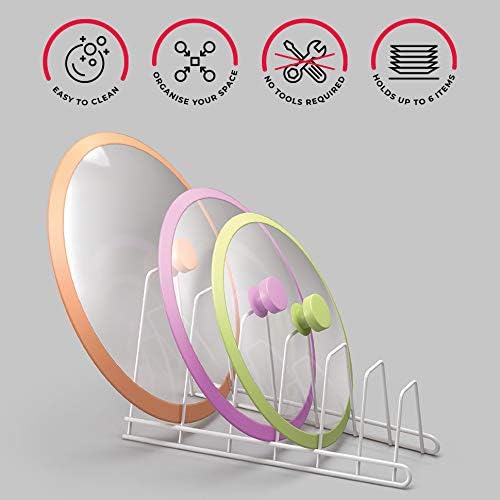
Another option for vertical sorting taller items within cupboards is to utilise magazine racks.
Go Digital With Paperwork
Paperwork can be a huge clutter headache in pst homes. One of the best ways to organise your paperwork is to go digital wherever possible.
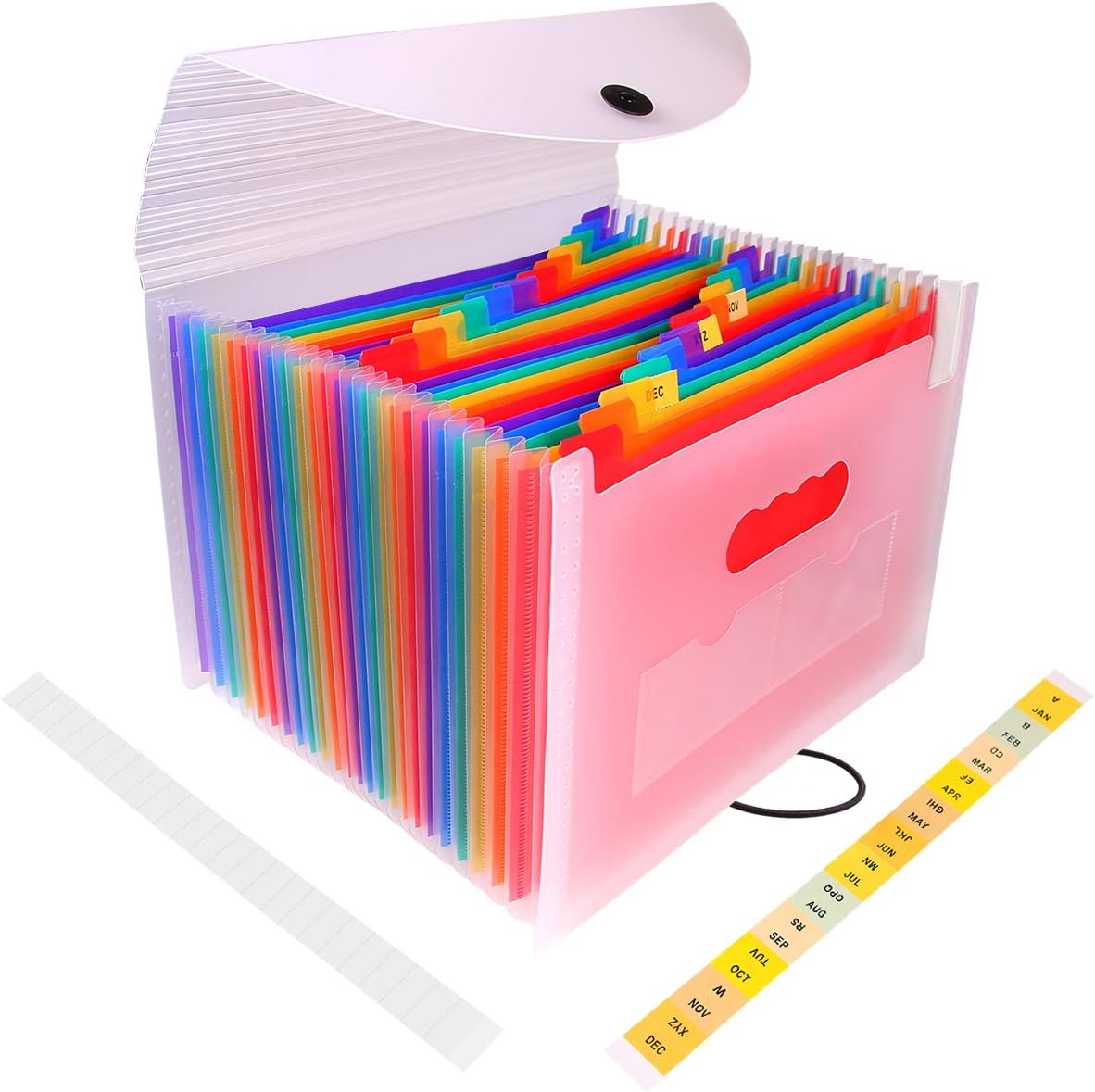
- Go paperless where you can by logging into your accounts and choosing the paper-free delivery option.
- Store anything you need to keep into a digital storage app such as Evernote. Simply photograph your document & shred the original.
- Have a designated place for important documents that you need to keep hold of such as an accordion file.
Have A Home For Instruction Manuals
Have one accordion file dedicated exclusively to instructions, warranties and receipts for important purchases and appliances in your home. You never know when you will need the instructions in order to use a new feature on a kitchen appliance or take your printer back for a repair under warranty. When these things happen, you will be glad you had these documents in together and ready to grab.
Consider Where Things Will Be Needed
This is important when considering where to keep everything in your home, but never so much as in the kitchen. You need to consider which items will belong in which cupboards.

If you are designing a new kitchen from scratch it is important to think about not only where the cupboards will go, but what will go in each cupboard in relation to your appliances. Even if you are not remodelling your kitchen, reassigning the purpose of each cupboard can be done at any time.
For example, make sure that the cupboards nearest the dishwasher house your plates and other crockery, making unloading much easier.
Storage Solutions That Stack
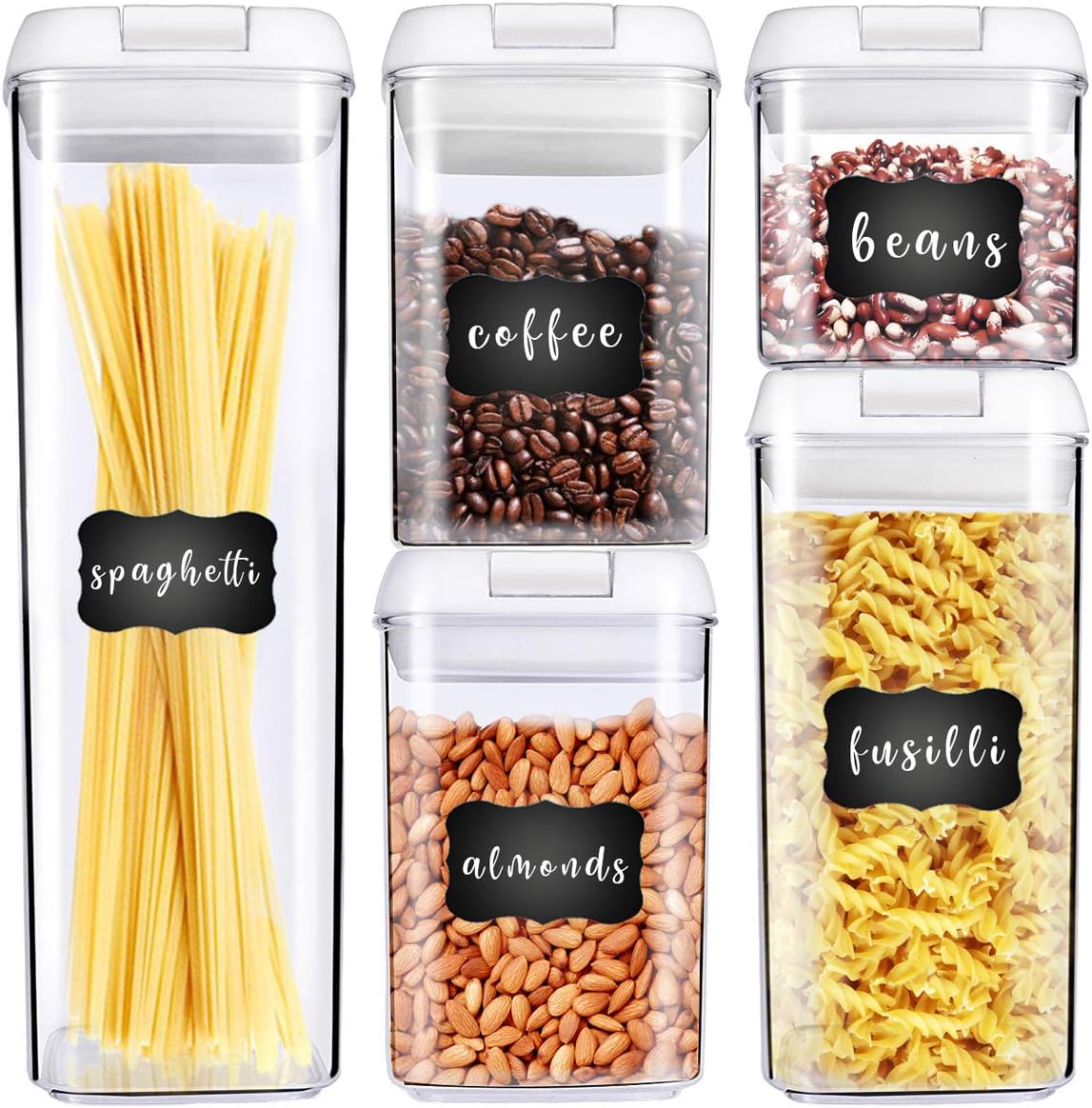
Think about storage solutions that work together. I love my kitchen canisters that stack neatly on top of each other and maximise space.
The other reason to consider stack-ablity is for when storage items are not in use.
Take baskets, for example. Baskets have so many uses around the home from sorting cupboards to carrying items from room to room when tidying and sorting laundry. The problem often comes when you have lots of mismatched baskets of various shapes and sizes that cannot stack neatly away when you are not using them. Find a type of basket that you like and buy multiples of that type so that you know they will stack for neat storage between uses.
Maximise & Multiply Shelf Space

Where you have “head space” above your small items within your cupboards, consider maximising shelf space with shelf inserts. These are usually freestanding, so require very little assembly and will not impact your kitchen’s warranty.

Stock Taking & Rotation
Once a week, ideally before you meal plan and grocery shop, take the time to stock take in your kitchen and rotate your food to ensure that you are using up anything that is coming to the end of its life. This will help to keep your kitchen food cupboards and fridge organised, plus help to keep your grocery bill down too.
Keep An Empty Drawer As A “Chair”
Do you have that one place in your bedroom that is “the chair”? It may or may not be a physical chair, but it was the place in your bedroom where the clothes that are lightly worn end up. These clothes are too dirty to be hung with clean clothes, yet have not been worn long enough to be actually dirty and sent to the laundry. Hence, they end up on “the chair”.
Overcome this issue by leaving an empty drawer in your chest of drawers that becomes “the chair”. At least this way the “not really dirty but not really clean” clothes are hidden out of the way rather than on display.
Store According To When Something Will be Needed
Ensure that frequently used items, such as basics you need every day, are easiest to access. You should never have to fumble past an item that it only used annually to reach something you use daily.
If you have items that you defiantly will not need for the foreseeable future (for example winter clothes in the summer, party catering crockery when you only host at Christmas), then store those things out of your functional space in the spare room, garage or attic until you need them.
Create An Organisation Station
Set up an organisation station or “command centre” in your home. Ours is in our kitchen and is the place where we keep track of upcoming events, shopping lists and meal planning.

For full details of how to create your own organisation station, plus all of the free printables, click the button below.
Let Your Space Define What You Allow Yourself To Buy
Before buying anything new for your home, first assess the space that you have allocated for that type of item. Let’s take kitchen accessories for example. If you really want a new kitchen container, do you have anywhere to put it? Or is your crazy and mismatched Tupperware collection taking up all of the room?
Letting your space define the things that you bring into your home means that before you make a new purchase, you may first have to declutter other items in that category in order to make room.
Use Microwave Minutes To Stay Organsied
A big problem that causes disorganised homes is often procrastination. Basically, procrastination results in piles of “I’ll deal with that later” things dotted around the house. To combat this, use “microwave minutes” for anything that can be dealt with quickly & easily.
What are microwave minutes?
Microwave minutes are small 5-10 minute pockets of time that you can squeeze into your day. These time blocks are where you manage to complete a few tasks when waiting for something like the microwave to ding or the kettle to boil. Using microwave minutes efficiently is a fantastic way to not only organise your home, but keep it organised forever.

Examples of organisation tasks to complete during microwave minutes;
- Mail – open it then store digitally and shred or file immediately.
- Dishes – wash up as you go and leave your kitchen clean after every meal to avoid a build-up
- Bathrooms – keep microfibre cloths and cleaning spray (out of reach of children, of course) in the bathroom to give it a quick wipe over when you get out of the shower.
Get The Ultimate Mum Bundle Now
Why Not Pin This For Later?

