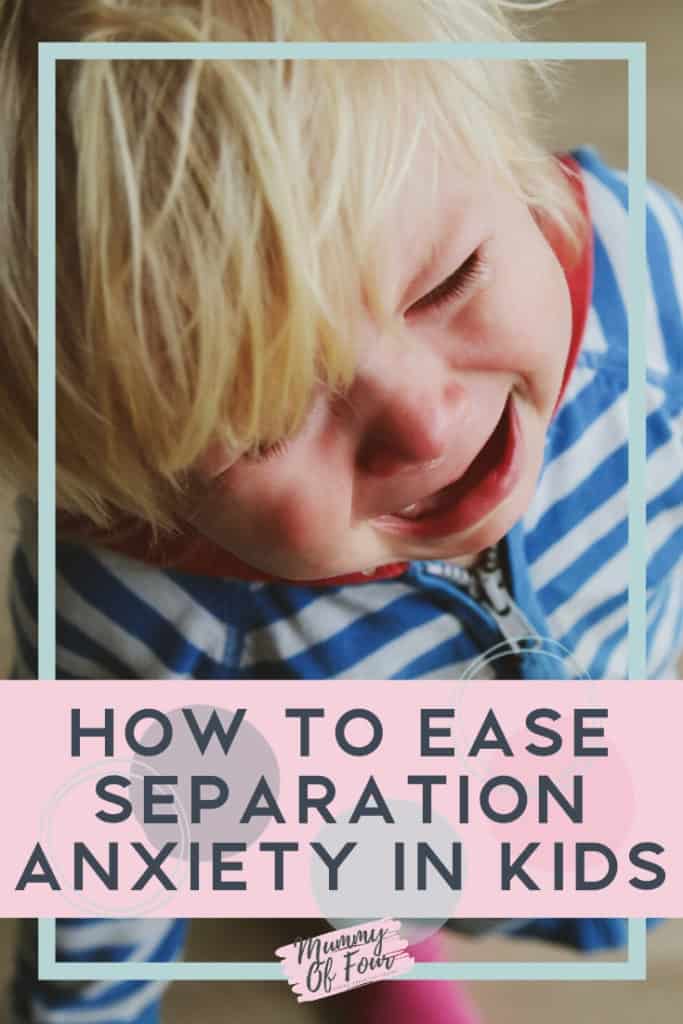
Dealing with separation anxiety in kids can not only be tough but also totally heartbreaking. Times like school or nursery drop off can be an awful ordeal with tears from your child and a whole day of guilt for you.
As a Mum of Four, I have been through this with my own children and developed strategies to make the whole process of addressing and resolving separations anxiety in kids easier. Read on or check out the video below for my exact strategy for separation anxiety.
Table Of Contents
I’ve been through this
When my eldest daughter, Bella, started school, I didn’t anticipate any tears ( from her at least, I was convinced I’d have to run around the corner for a good cry). She had been taking her brothers to school each day since she was born and was more than familiar with the process.
We had even been to a settling-in playgroup once a week in the classroom where she would be starting. For one hour a week, the incoming class of kids, accompanied by their parents, had a session in the actual classroom with the actual teacher. They practised hanging up their coats, using the toilet, doing all of the class activities and having snack, just as they would when they started properly. She was prepared, I was convinced she’d breeze it.
Then came her first day
She couldn’t wait. She looked so adorable in her new uniform.
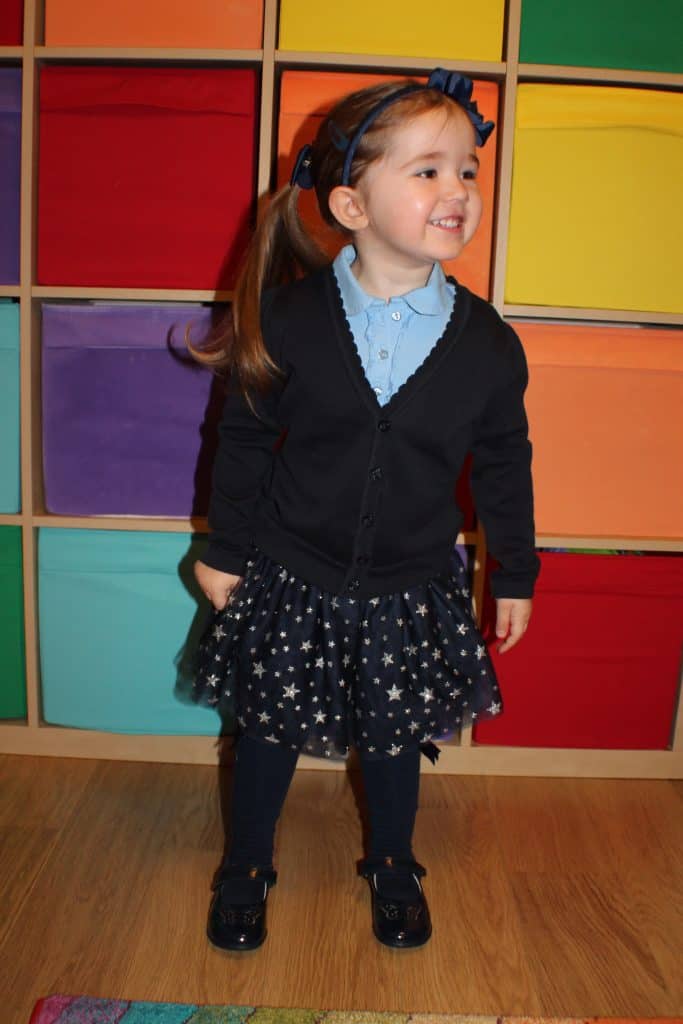
I took her into the classroom, kissed her, hugged her and waved goodbye. That’s when I saw it. Her lip wobbled. I remembered the advice given by many a school teacher that “lingering goodbyes don’t help” and smiled, briskly said, “Love you, see you after school when I pick you up” and left.
By the time I peeked through the window, she was sitting on the teacher’s lap, sobbing.
What had gone wrong?
She was prepared, wasn’t she? Well, yes, but I had failed to fully explain one crucial detail. I had assumed that she had known that although I had been with her in the settling in sessions, I would be leaving her when it was “real” school. She had wanted to go to school, desperately, but she had mistakenly assumed that I would be going with her.
Make It Clear What Will Happen
My advice? Explain, no, over-explain everything. Do not take anything for granted. I had thought that she had seen her brothers being dropped off and would know that the same would happen when it was her turn. It turns out, 3-year-olds do not necessarily draw these conclusions.
Now when my youngest, Zara, was attending these same settling in sessions. We don’t call it school, we call it “school group” and we have this exact conversation every week…..
Me: What happens in school group darling?
Zara: Mummy comes with me.
Me: What will happen after your 3rd birthday?
Zara: I will go to big school and I will wear uniform and I will say “bye bye Mummy” you go and do some work and pick me up later.
You see, she understands. We have been over it SO many times that she can explain it to me. This is the level of understanding that you need to aim for. Explain things to your children and the more they understand that you will be leaving, but also returning, the easier they will find it.
Avoid Lingering Goodbyes
Tempting as it is to spend a long time having a “proper” goodbye, the general consensus among nursery teachers is that drawn-out goodbyes are more likely to make your child more upset than anything else.
The staff in your child’s nursery or class will be used to these difficulties and skilled at dealing with them. The best thing that you can do, whether your child is crying or not, is get out of there and fast.
Check out the video below for some more tips for when your child starts school.
Keep That Stiff Upper Lip
When yout child starts school or nursery it can be an emotional time (trust me, I know. You only have to look at the vlog below to know how much I know). The thing is, letting your child know that you are sad, anxious and worried will make them upset, guaranteed. Keep it bright, positive and breezy and ave your tears for when you are well out of sight.
Use The Hug Button
This is s beautiful trick that has been floating around the internet for a while. I don’t know who originally invented it, so cannot give them credit, but it’s genius.
Here’s what to do
Draw a small heart on your hand and another on the hand of your child. Tell them that every time they press the heart button they are sending you a hug and you are sending one back. Practice together pressing the hearts and feeling the warm magic hug surround them. Explain that even if the pen washes off, the magic heart hug button will still be there and whenever they want a hug, all they have to do is press it.
I believe that psychologists will explain that this works using NLP and anchoring in positive feelings. I personally cannot fully explain the science behind it, I just know that it has worked beautifully for my children.
Something For The Teacher
A tactic that worked well for Bella to ease her out of her 10-day streak of meltdowns at drop off was the “show the teacher” method. Each evening, we would choose something to show or gift the teacher. One evening we even naked cakes. Some days it was a hair clip she wanted to show, or a drawing she had done. Either way, switching the focus from “I don’t want you to leave me” to “I’m so excited to show the teacher X or Y” really helped.
Pickup Promise
Another tactic that worked really well was the promise of something at pickup. This doesn’t have to be an expensive gift or even sweets (although feel free to pick whatever works for you in the early days). For Bella, it was as simple as fresh bread from the bakery. She loved being met with a fresh baguette from the bakery, and in order for me to go and get said bread, she had to agree to me leaving her in school.
Sign At The Window
This strategy worked so well that it became a bit of a favourite ritual. Every morning, I would ask her to go and sign “I love you, now it’s time to play” at the window. In order to do this, of course, she had to untangle herself from my leg and allow me to leave to reach the window.
I had always done baby signing with my children as a method of encouraging their speech and language development, so this was an obvious tactic for us, but it can work for anyone and is very easy. Plus, learning the signs can be a nice way to prepare them for the separation.
Here are the signs
Spoiler alert, they are super easy. Check out the video about if you want to see the signs demonstrated.
- I – point to yourself of your eye, whichever you prefer. This isn’t about “perfect sign language”, it’s just about communicating with your child to ease their anxiety.
- Love – cross your hands across your chest
- You – point to your child
- It’s time – point to your watch
- To play – hands in front of you, palms facing up, move your hands up and down.
Conclusion
Separation anxiety can be tough on parents and children alike. Preparing them for what will happen then following these steps will ensure the best chances of times like school or nursery drop-offs going well.
At the time of writing, I am going through this myself with Zara. She is a few days into school having never left me before and has shed some tears (and so have I). I do, however, know that if we follow the steps, she will be settled and happy very soon.
Good luck lovely, you’ve got this!


Why not pin this for later?