
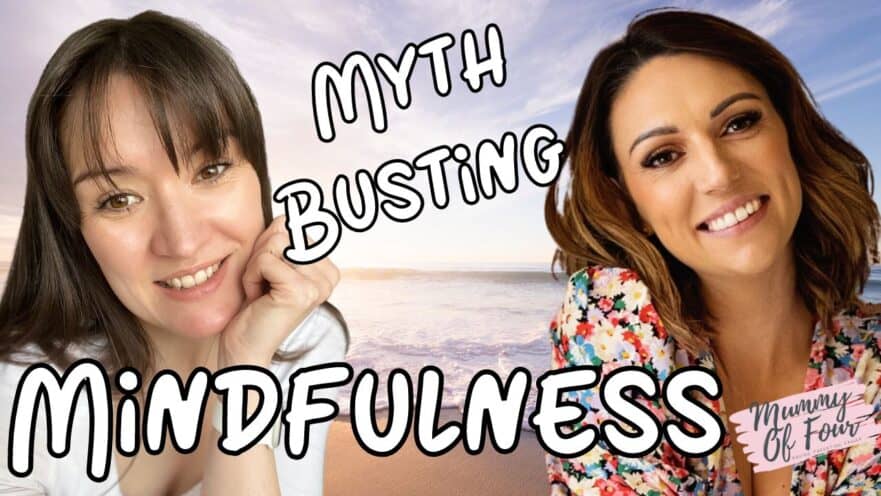
Unlocking the Potential of Mindfulness: Amy Polly, The Mindfulness Rebel, shares her transformative journey and expert insights in this captivating interview. Join us as we delve into the world of mindfulness beyond meditation, busting misconceptions and exploring its profound impact on mental health and well-being. Amy’s corporate background and experience in the Fire Service provide a unique perspective on integrating mindfulness into organizational culture. Listen closely as she candidly discusses her personal experience with Attention Deficit Disorder (ADD) and how mindfulness became her powerful tool for managing its challenges. Gain valuable insights, practical tips, and an empowering message of inclusivity as we navigate the intersections of mindfulness, mental health, and personal growth with Amy Polly, the mindfulness advocate and author of realistic and down-to-earth approaches.
ad disclosure – this post may contain affiliate links
Table Of Contents
Can’t Listen Right Now? Read On Instead…
Rhi: What is mindfulness? How can we apply it to make our day-to-day lives happier and easier? Why is it important for our children and how can we integrate it easily into our lives? I am re from Rome four.com and today I’m joined for a chat by Amy Polly, mindfulness, rebel and Mental Health Advocate. Amy has some really important insights to share about how we can take care of our own mental health.
Some super easy steps that we can slot into even the busiest of days and how we can set an excellent example for our children. Now, I’m really sorry to say that while recording this, I made a slight. Audio era. I’ve got my fancy microphone set up. I’ve got all this fancy software, but when I was bringing on an interview guest, it’s the first time I’ve done this.
I clicked the wrong button. Then all the audio ended up coming out of my laptop. Not a fancy microphone, so I’m human. I’m sorry. I’ll do me better next time. I hope you can ignore that my audio is not quite as crispy as I was hoping that it would be. But that being said, I really hope you enjoy this interview.
Amy had some amazing insights during our chat, some takeaways that I am really going to be implementing it into my life. So without further ado, here’s Amy Polly. Amy. Hello. Thank you for joining us today.
Amy Polly: Hi. Hello. Thank you for having me.
Rhi: It’s fantastic. It’s absolute joy. Thank you for being my very First guest on my video and podcast, Real Talk with Rhi!
Mindfulness. We should all know what this is, but I feel like most people just don’t. So what would you say people’s idea of mindfulness is compared to the reality of what you know it to be?
Amy Polly: So, This is like my life’s work, by the way, is to help bust these misconceptions.
Cause I believe in it so much. Um, I think that people still think that mindfulness is really woowoo and it’s just about meditation and they need to be somewhere very calm and they need to be calm and everything needs to be still. And maybe there’s some rainbows and some unicorns and, uh, you know, it’s, it’s.
All about relaxation and sort of sitting crosslegged, and it is so far from that, it’s unbelievable. It’s so much more than just meditation. Meditation is a part of mindfulness, but mindfulness isn’t just meditation. And I guess the way that I always explain it is mindfulness just means awareness. And we are all aware all of the time.
The problem is that our awareness goes into places that are unhelpful, like the past or the future, uh, or our awareness is taken by things like technology, um, and going down social media holes. And it’s, you know, distraction is a big thing in our modern world for our cave person brain. Um, and so really it’s a brain training to train yourself.
To put your awareness where you want it to be. Basically. That’s how I explain it. Um, so less, we’re all aware all of the time. Does that make sense? Yeah,
Rhi: absolutely. So less having our fingers pressed together and our legs crossed and saying, oh, with something, we don’t have to go to a yoga’s future to do more.
Just choosing what we are keeping in mind then, rather
Amy Polly: than, yeah, you can practice mindfulness anytime. Fantastic.
Rhi: What brought you to this space? What made this your life work? How? How did you end up here?
Amy Polly: How long have we got? Um, so basically in terms of mindfulness, I found mindfulness when I was going through a period of stress.
Um, now bearing in mind, this is, I always say 10 years ago, but I’ve been saying that for a little while, so it must be starting to get more than 10 years. Quite often that’s what we do. We turn to things. Once we get to a point of. Crisis or nearing crisis. And that is what I did. So I was going through a period of stress, wasn’t in a good relationship at the time.
Uh, my work was quite stressful and I wasn’t sleeping very well. And as we do, we go on some search engine in the middle of the night and I found the words mindfulness and meditation. And so I. Looked into it, started to practice, uh, went on YouTube, did a couple of meditations, and just immediately I noticed the way that I did feel relaxed.
I noticed that I was falling asleep a little bit easier, and then a week of practicing that, um, I was sleeping. You know, more soundly and I, it was just that light bulb moment of there’s something in this, I need to know everything. Uh, and that’s what I did. So I went and signed up, got some books off Amazon.
Amazon signed up to a diploma in mindfulness and meditation as you do. Um, and yeah, just learnt about it and. Over this journey, I’ve learned more and more that it isn’t always inclusive and accessible. It’s so much more than meditation, but, but that’s where it all started for me, helping me to sleep better.
And then as it’s progressed over the years, it’s helped me with so many things, going through miscarriage, losing my grandparents. Um, having my little boy, just like the day-today, stresses of the world. I like, I dunno what I would do without my mindfulness practice. Um, and I was an accountant for nearly 20 years.
Oh my. So this is a huge change for me to now be running my own business. But people have always been my thi like I just love people and I love helping people. Um, and when I was given the opportunity within my last role to to work with people more than spreadsheets, I was like, ah, this is my thing. Ah, this is what I wanna
Rhi: do.
This is your Jan. This is your groove. Really when you put it like that, it sounds so simple, yet so many of us just don’t do it. That’s the the fact of the matter. I think a lot of people, correct me if I’m wrong, just don’t know what it is, don’t know what to do, and it seems like a very complicated sort of out of reach thing that other people can do.
So what would you say would be a really good starting point for someone that’s looking to explore mindfulness? But just doesn’t know where to begin. What would be those first steps you could suggest they might
Amy Polly: take? Yeah, and, and you are right. I, I do think that people think it’s complicated and it’s like another thing to add to the to-do list, but it absolutely isn’t you.
Like I said, you are aware all of the time. It’s not something new to do. It’s a different way of doing things. So, What I would say is, as I said before, meditation is a part of mindfulness. And I know people hear the word meditation and think, but it, it doesn’t have to be, it’s, it’s not necessarily spiritual.
It doesn’t have to be lengthy. It doesn’t even have to be in silence. Um, you know, for someone like me who has adhd, uh, that is not the most easy thing in the world. And I always say, if I can do it, anybody can do it. So the starting point for me with mindfulness is this start to notice. All of the things that you do on autopilot.
And bearing in mind my business started teaching mums, that is where this all started because you know, I struggled and I wanted to share what I’d learned. And we do so many things on autopilot. You think about your typical day, where you wake up in the morning and. You pull the covers over the bed, you go and brush your teeth, you are popping the kettle on.
You are, you are rushing around maybe to get the kids ready. All of that, you are not really paying attention to anything that you are doing. Your mind is on the next thing you need to do, getting them out the door, what you are gonna be doing later, the thing that you messed up yesterday. We are not present with what we are doing, and unfortunately, that then impacts on us not being present with.
Maybe our partner, our friends, our children, our colleagues, um, cuz quite often we’re on autopilot when we’re speaking to them. Like, how many ch times has your kids said to you, look at this rock. And you’re like, yeah, yeah, yeah, I’m, I’m trying to do X, Y, and Z. But, you know, but to them that’s really important things.
So if we can start to be a bit more mindful in those mundane everyday moments, our brain starts to train itself. To be able to choose to do that when we want to do it, which might be when you are interacting with your kids. So start noticing your autopilot. You go away from this podcast, start noticing and you’re thinking, oh my goodness, there’s so many things that I do without thinking about it.
Um, and then just choose one or two things. That you do every day anyway, to be more present with that is mindfulness. So use as many of your senses as possible. And it can be like when you’re making the bed, smelling the sheets, good or bad, you know, might have teenagers, uh, but smelling the sheets, uh, you know, really listening to the sounds of the movement.
Really noticing like the movement in your muscles and your joints. Uh, you might even notice sounds outside. You might be able to notice. Things that you can, uh, taste. Maybe you’ve just had a coffee or whatever it is. So really using those senses. One of my favorite things is brushing your teeth cuz you are using all of your senses.
You can see yourself, you can smell, you can taste. These little things seem so almost ridiculous, like how is that gonna help me? But that is the starting point. Retraining. Your ability to pay attention and that is where it all up. Does that make sense?
Rhi: Yeah, absolutely. So it’s actually, um, it’s like the grounding exercises I do with my children, isn’t it?
So when they’re stressed out, then you are asking them for something they can see, something they can smell. So, but, but just rather than being like, okay, I’m in a point of crisis. I need to do this now in order to calm down, just kind of. Doing it a bit more
Amy Polly: day Proactive.
Rhi: Yeah. Before, before we reach that point where we’re like, Ooh.
Um, so I think, um, I mean you, you touched on the, um, uh, diagnosis of adhd and I think this is something that a lot of women and girls especially, they’re not diagnosed enough, would you say that’s That’s right. Yeah, absolutely. And I think a lot of us have kind of tangled membrane and, you know, a lot going on and a lot to juggle.
At what stage was it, the mindfulness that kind of made you. Realize that there may have been ADHD at play, or does that come, what
Amy Polly: was your kind of story? No, absolutely not. It was actually having my baby was the catalyst for my diagnosis. Um, yeah. When I d when I was on uh, b BBC did. An awareness piece, which is really nice.
They contacted me to talk about it because I don’t think it’s talked about very much the link between hormones, um, and how that can really affect your ADHD symptoms. So throughout my life we have to remember that you, you, the way that you are, Um, brought up be that the education system that you are in, the type of school that you’re in, the teachers you have, your family, your friends, that environment can, environment can really impact how it presents for you.
And you know, I feel very fortunate that I had a very close family. Um, my mum, I always say, look, I dunno what I want to would do without my mum. She’s been very supportive. At the time I probably thought my school was crap, but in hindsight, my school was all right. You know? Um, and so I think that throughout life I managed my.
Symptoms because number one, I didn’t know I was different to anybody else. I thought everybody else was struggling the way that I was struggling. Like, you know, I didn’t know I was any, I was any different. And also, you know, we know that, uh, Females mask easier. We often don’t have so much hyperactivity.
Um, and so it doesn’t always get spotted like my grades are okay. When you are not a problem to other people, when things are externally an issue, it’s less likely to be noticed. And so I just cracked on like, I got support when I needed it and I was okay. And I think that sort of happens throughout my life and even in work, you know?
When I look back and see the struggles that I had in my accountancy career, um, some of the things that I did last minute, the way that I studied and passed my exams and stuff like that, um, obviously I didn’t know any different, but, uh, I just got on with it because I only really had me to look after when I had my baby.
It was a whole different ballgame and I think in that situation, the hormones had an effect. I think the fact that you’ve got somebody else to look after had a real big impact cuz it’s not just you. Anymore that you’ve got to look after. There’s, there’s somebody else to look after. And, and even my mum said she was shocked at how I didn’t manage, cuz Sweden didn’t, I’ve always wanted a baby and I was so excited and blah, blah blah.
And it manifested as postnatal anxiety and I really, really struggled. And um, it was in conversation with my gp cause I just knew that I was not okay and I could not articulate exactly why that was. But it was that sort of inner knowing that. Something’s not right here. My, my thoughts were racing much more.
My mindfulness practice felt very difficult. Um, and so yeah, having my baby was the catalyst because I just knew that something wasn’t, wasn’t right. Um, and I guess I just couldn’t mask any anymore. So, yeah, that’s where it all came from when I was 37.
Rhi: Oh wow. So I guess you were quite lucky in a way that you’d already established a lot of these mindfulness things that were sort of strategies to accidentally help.
With Yeah. What you
Amy Polly: didn’t realize was a problem. Yeah, and I guess the thing is, you know, and I’ve said this all along, that uh, you know, even before I knew that I had a h d I knew I had a busy mind. I knew that I was not, Inherently a calm person. Um, but I can still practice mindfulness because mindfulness isn’t just about being able to sit still.
In fact, you don’t have to sit still to practice mindfulness. Uh, a lot of time people don’t realize that when they’re going to the gym or they’re going on a walk or a run, that actually, that is a very mindful practice. Um, you don’t have to be sitting still in silence for 20 minutes. So I just found what worked for me, and I guess that’s why I love teaching so much because I know that I’m a little bit different.
Like when I go into schools in my Disney track suit and I’m, I’m sort of, hi everyone, you know, they probably love that. Expect, I know you, you’d love it. Yeah. You need that track suit. Um, you know, you’d expect a, maybe a mindness teacher to come in and be, and be very calm and I, I’m just not, I’m just not like that.
Um, and I think, I hope that that makes it, um, a little bit easier for people to learn. It makes it, um, You know, a bit more human-centric and a a bit more accessible for people. That’s what I want it to be inclusive. And so I just found my own way. I guess I’m a little bit stubborn in a way, and I did hyperfocus on learning all about mindfulness.
So, um, I just found my way and it’s really worked. So I want to help other people to find their way. It doesn’t have to be my way, but to find their way. Does that make, that’s fantastic. Yeah.
Rhi: Fantastic. From the, the ADHD point of view. If there’s anyone listening that thinks, oh, I wonder if, if that’s, that’s me.
What would you say were some kind of traits that perhaps you didn’t realize were connected, but were kind of with now you can see, oh, well, that that’s adhd, and then perhaps someone listening might think, well, maybe it’s worth me exploring this further. What
Amy Polly: would you, which kind of, yeah, so. Obviously I am not in any way a psychiatrist, so I would not be able to, you know, diagnose me from your personal experience.
Yes. For your, uh, so I would always say for people to go and, and definitely have that. And I know not all gps are as good as mine. I was very, very lucky. So, but, But be persistent if you need help, whatever it is, not, not just the agency, mental health, whatever it is, if you need help, unfortunately in this world, we have to be persistent and that can sometimes feel difficult.
You know, why should I have to fight for help? But unfortunately, This is where we’re at. Um, you know, systems aren’t always working, so just make sure that if you do feel like you need help, you know, you, you keep going. So, um, I think some of the traits for me that I’ve come to realize, and by the way, it took me well over a year of processing before I started to talk about it.
Uh Oh wow. Really openly cuz and I guess that is part of my mindfulness practice, that self-awareness and being able to process things and look after myself. But I really realized that my. Emotional dysregulation has really impacted my relationship. So, uh, having quite big emotions where people would think that that is ridiculous.
Um, you know, uh, I struggle to articulate myself if I am emotional. Um, so my partner now, bless his heart, really is starting to understand that. So he knows that if it’s an emotional situation, we can actually take a pause and then I’ll be able to talk about it. Another time or later or whatever. Uh, cause I really find that difficult and sometimes my emotions will come out.
For example, if I’m feeling anxious or upset, it actually comes out as anger and I’m not anger. He’s, he’s been so good recently exploring that. So, um, that was a really big realization for me cuz I know that I’m very self-aware. But some of those things you just can’t control. So you have to be able to, to create the gap, which is one of the parts of mind.
This is create that gap. To then respond rather than react, which is so useful when you’ve got a D h D. Other things like, um, you know, it’s being very sensitive to rejection. That really cuts deep and, and my empathy really helps me with my job. But my mum even said to me the other day when we were watching some hospital program, oh, you’ve got too much empathy.
And I said, but that is really good for my job. But things cut me deep, you know, even when I’m watching a program. About someone getting hurt, like funny videos where someone’s hurting themself. I do, like, I don’t, I don’t particularly like that. I can’t watch things where people are hurt and stuff like that.
So things like that, that you think, especially like the emotional thing and also working, um, you know, till the last minute, the time blindness is, has always been an issue, but if nobody knows about it and I’ve still got my stuff done. As I said, it wasn’t a problem to anybody else. To me it was an absolute nightmare, but nobody else knew about it cause I still met my deadlines.
Um, so these things can be really debilitating in your life. And like I said, it depends what support you’ve got and things like, I mean, you do not wanna look at my house right now. It’s absolute and everybody’s untidy, but I mean it like it’s, it impacts life is, you know, what I’m, what I’m trying to say.
So yeah, so there’s some of the things I guess that, that I struggled with throughout my life and. And now I realize that that’s what it is and I’ve started to be able to help myself. So yeah, it’s been really eye-opening even though it posed a lot of questions. It ha it had a lot of unpacking to do. Yeah.
Oh, that’s really,
Rhi: really interesting. Cuz not all of those things people would necessarily think of as related. And I know one thing that, um, I get asked a lot about, you know, my children have autism diagnosis. The diagnosis, plural of diagnosis. I wanted to get ’em diagnosed so I could access help from school.
But I feel like when you’re out in the world as an adult, it’s getting a diagnosis. It’s like it has a different reasoning behind it. Cause obviously you’re not applying for help or extra time in the exam or something. So what difference has it made for you in the world having a diagnosis? Or is it more just the understanding of your mind that.
That’s helped.
Amy Polly: I think it’s a bit of both actually. And I think it’s like with anything, uh, you know, it doesn’t have to be diagnosis, just anything that comes back to self-awareness and understanding yourself because. By knowing yourself, by knowing how you work, by knowing the things that you struggle with means that, number one, you can help yourself.
Like that literally has to be number one. It isn’t anybody else’s responsibility. Even though we do want the world and organizations and schools and everybody else and the government to do what they. Are supposed to do. Number one is you. So understanding yourself is so powerful because then you can make sure that you’re putting things in place to help yourself.
Um, like I always say, when we talk about whether it’s mental health, physical, it’s all health. Nobody else can go and get a six-pack for you at the gym. Nobody else can move your bad knee for you. Only you can do that. And it’s the same with your mental health, but we seem to have forgotten that it’s, it is.
Firstly, our responsibility. And I’m not saying that it’s always easy, my goodness, I know it isn’t. But phys looking after your physical health isn’t always easy, is it? So I think that we just have to take back that, that responsibility and that ownership, and I’ll tell you what’s really bloody empowering actually, to be able to do that.
So I think that’s the first thing is, is just knowing about yourself means you can help yourself. And then the second thing is, Then you can ask the wider world for help as well. If you need to have certain things in place to work better. If you need to have certain conversations in your relationships, then you have an understanding to be able to do that.
Now I do not have all the answers. I do not articulate my well and myself well all of the time, just ask my partner. Um, but it all comes with learning. And now we can learn a bit together. But it had to start with. Myself burst. Is that, yeah, that’s sort of what it’s helped me. Absolutely. And
Rhi: I couldn’t agree more.
I’ve always just think the more we know about ourselves, the better. Just down to the basics of do I learn better by reading or listening, you know, just knowing the basic things about ourselves. So I couldn’t agree more. That’s, I was wondering your take on it, but I totally agree with you that the more we understand about ourselves and our families, the better we can put things in place.
Just to make everyone’s lives easier. I think that’s what my kind of whole philosophy is all about. Like how can we make life easier? And if that is making sure we are taking care of our health and things so things don’t go
Amy Polly: wrong. And I have to say as well, sorry Lee, I was just gonna say like for the kids that, you know, I think back and think how would things have been different if I was maybe diagnosed earlier?
I don’t, I don’t think about that too much because I can’t, I can’t dwell on the past enough. I can’t change it. But obviously thinking about the way things are now, um, for children, You know, we think about their self-awareness. Well, obviously it will help with their self-awareness as they’re growing up.
And we also need to make sure that things are in place in schools and things like that, and for when they get to work, because there are some things that we might need help with. Now, as I said, some of us present differently, but if you think about, you know, children in school, especially if they have. If they are more on the hyperactive side, might be classed as, you know, a bad child, but actually they’re just misunderstood.
Yeah. And I think a lot of the time, even as an adult, you know, I, I bet you’ve probably, I don’t, people probably might not have noticed, I, at the end of, when I’m explaining something quite often, they say, does that make sense? And that’s not because. I am questioning my knowledge or what I’m saying. It’s actually because growing up in life, we can so easily be misunderstood that it becomes a habit to make sure that people are understanding what I’m saying, because I know that it can maybe come across the same, the the wrong way.
Um, and so I do that, you know,
Rhi: and I like. Does that make sense? As in, I dunno if anything that I said was coherent, but I sort of NoMy, did it come
Amy Polly: out ok? You brain spoken so quickly, like, and did, did that all come out of my mouth, how it sounded in my head. Um, but yeah, so I think it’s important as well for, for kids to get the support that they need.
And I, I know that it’s difficult in schools, there’s so many children in classrooms and stuff like that, but you, you can look now at some of, um, The adults that are being diagnosed and look back at their school reports and, and see how obvious it looked like. You know, when you are a child, you sometimes struggle with that self-awareness anyway, and then to be told that you’re being naughty when you can’t understand I’m not being naughty.
You know, you, you are doing n think that you are being naughty. You’re just, yeah. You’re just being, so there’s still, I think there’s still a lot of, um, a lot of learning to do, but I think that the tides are turning.
Rhi: I, I really do hope you’re right. I mean, my absolute hope I’ve, I’ve said this for a long time, is that by the time my children are older, That looking after your mental health is as normal inverted coms as looking after your physical health.
And that it’s, there’s no stigma to it. Um, and I, I have high hopes for it because the children are coming home saying we had an assembly on mindfulness and things, which never would’ve happened when I was in school. That like mindful what? And I didn’t know anyone. I think the only people who have been diagnosed with anything would’ve been dyslexia.
You know, there was a bit of that, but I don’t think there was as much of awareness. So how, where do you see that, you know, as, as a nation in 10 years? Do you think that we’re going in the right direction with all of this? Have we got hope for our children all? Are they gonna be all right?
Amy Polly: Do you know what I, I’ll usually get a bit ranty about the government if I’m, if I’m, uh, for too long.
But I won’t, what I will say is that I think there are a lot of amazing people. That are moving into the right places to be able to make change. And we all have to have hope in that. Um, but we all, like I keep saying, it’s a joint responsibility. So we still need to be taking our own personal responsibility and looking after our own little world in, and that makes part of the bigger world.
Um, and you know, when you think about things like, obviously I work with organizations, um, I, I talk about mental health, I talk about mindfulness. And in my, in my previous role in the fire service, I was, uh, strategically for mental health and wellbeing. And, and when I started to sort of look into our mental health and wellbeing strategy and, and pulling that together, it sort of, I guess, solidified the thoughts and feelings that I was having about.
About the disparity between physical, because even though we all roll our eyes at health and safety, the fact is health and safety. Health and safety exists to try to put things in place for you to not be injured or to be in crisis in terms of your physical health. But we don’t have the same outlook when it comes to mental health.
And I think the other issue is that we talk about mental health as if it’s mental ill health. Mental health does not mean a diagnosis. Mental health does not mean depression and anxiety. Mental health is just the term that we are referring to in terms of your health of your mind. It is not a diagnosis, it is not ill health, and I think that that conversation still needs to change because people say, even people I’ve heard working in the space sometimes say period of mental health.
There is no period of mental health. We all have mental health all of the time, and so I think they’re the little changes that we need to do. And when I talk in organizations and stuff, I talk about the mental health in betweener because that’s what I think that. The majority of us are, and being a men mental health in between, it means that sometimes your mental health is going to be good.
And by the way, good does not always mean positive. It just means that you have things in place to be able to manage. Uh, and sometimes our mental health might take dip on that rollercoaster. And actually we could be in a really, really difficult place, but we’re still not at the level of having a diagnosis.
Or maybe we are not at the level of crisis, but we’re still in a really, really low place. And I think that that is the journey that most of us have with mental health, and we need to make that more widely understood mental health, not just about anxiety, mental health, not just about depression, mental health, about the continuous journey that we are on.
That is sometimes. Awesome and good and sometimes really, really hard. It’s strange,
Rhi: isn’t it, cuz you wouldn’t say, had a period of health when talking about your physical health. You’d say period of and having a, having a period of poor health, or I’m feeling really healthy at the moment. You wouldn’t just say, I had, I had health.
It was just. It’s a bizarre, yeah, it’s bizarre that this, this, this massive disconnect. I think that the kind of vibe I’m getting is that we can’t, we can’t rely on and like, we can’t rely on other people. We’ve all got, we’ve gotta take responsibility for our own lives and our own children. So in doing so, we’re gonna take responsibility for, for encouraging positive practices in our children.
For, for example, I do, before the children go to bed, I ask them what was the best thing that happened that day? And then they think, oh, well this was quite good. This was quite good. And they’ve gotta pick. The best one. And that forces me to do it as well. And I feel like by um, making it something I’m doing with them, I remember to do it because it’s for them.
And sometimes it’s hard as mums to do things for ourselves. So what can we do? With our children and for our children that will also benefit us as
Amy Polly: much. Sure. So, um, first thing I would say is when I wrote the Children’s Journal that I now use in schools, which I never thought I would do, but it’s been, it’s been awesome.
Um, that actually came, it, it’s a bit different to other, other journals because it has an adult’s guide that’s separate and that exactly plays into what you are saying it because it was all about that collaborative. Approach, um, and making sure that, and it’s an adult’s guide. It’s not parents. It could, you know, uh, not everybody has parents in their life that are gonna do things like this with them.
Um, I’ve worked in a couple of, uh, schools in quite deprived areas where that just isn’t, isn’t, isn’t possible. So, um, carers, aunties, uncles, brothers, sisters, or whatever it is, but it’s all about that collaborative approach, like you say, and having that support. Um, and some of the things the journals go through is obviously explaining what mindfulness is, but the beauty about children is that they don’t ask.
They don’t really question it, they just give it a go. Um, and it’s really lovely to see how quickly they take things on board. Um, so usually around like sort of 10, 11 year olds and you’re just seeing them. They’re just, they, they just like enjoy something, doing something a bit different. So, um, some of the things in the journal, you know, asking them how they’re feeling or asking them what went well today, um, just so that they start to get into the habit of being able to recognize how they’re feeling and articulate how they’re feeling and maybe what played into that.
And then obviously this also helps with your communication and you learning maybe about your children. Um, and then asking them what didn’t go so well so that they are able to know that it’s okay to recognize that things that didn’t feel so good, rather than ever pushing it away or down or ignoring it.
Um, it’s okay to feel sad about something. Um, and then we work on sort of letting that go, not floating away on a cloud is what I always say, so that they can let that go. Um, you know, we can move on. We don’t need to worry. If there is something that we need to address, we can do it together. Um, and then we practice the mindfulness together.
So, like you said, you practice your gratitude together. You can just do a simple breathing exercise. That’s what I do with my four year old. You know, he, uh, he’s four going on like 14, but uh, you know, he’s so small and he just took to that really quickly do little breathing techniques with a swirl on our hand in the moment.
Um, and when I sit with him and we do some. Little breathing meditation together. And quite often I say to him, what is mindfulness? And he’ll, he’ll tell me. So I’m really with you on that sort of collaborative approach, trying to get to do it together. Um, and remember it doesn’t all have to be calm. One of our mindful practices is Lego.
Um, and that really helped me because with, I think it might be a bit of an ADHD trait that I don’t really, I’m not very good sometimes with imaginative play, like keep playing with the same carrum up and down the, you know, the, the, the mat. Um, but Lego’s totally different, I guess. You know, that’s a little bit of a hyper fixation for me.
I really enjoy it. It’s a really good mindful task. Um, and so we do that together. Uh, sometimes we free place, so we do Lego bingo where we just get a handful of Lego and see what we can build. Sometimes we’ll have a set and, uh, that I think is the beauty of mindfulness, that you can make it whatever you want it to be.
Um, so try and think outside the box. Try and think about things you wanna do together. If you are someone that likes to have a walk, get your kid involved and go out and start to notice the things. Maybe put your phones away and actually start to talk about what you can see, what you can hear, what you can smell, and, and yeah, just little things like that.
I think sometimes we make, we make this into a big thing in our mind, but it’s just the small habits every day.
Rhi: Probably lots of us are doing mindfulness in small ways that we don’t even know. So for example, sometimes I ask the children quite often actually, what was their peak and pit of the day? And that’s, you know, the high point in their low point, which is literally what you’ve just described.
But I think perhaps we don’t give ourselves enough credit cuz hey, that’s mindfulness.
Amy Polly: It’s like, oh, and I think people don’t like to use the word for some reason, I was told when I started moving into some corporate stuff, oh, well you could call it something else. You could call it managing stress or you could call it working on resilience or blah, blah.
And I said, I don’t want to, I said it, I wanna call it mindfulness because I want people to be more comfortable with saying that it’s not, yeah, it’s. You know, I don’t wanna shy away from it. Um, so yeah, you’re right. You’re absolutely right. And more people are doing it than they think. And when I start to explain it, people go, oh, yeah, I, I do that when I’m doing X, Y, and Z.
Or I notice that when I’m doing this, that, and the other. Um, paddle boarding for me, again, is a mindfulness exercise because you’ve gotta focus on staying it right, not fall in the water, blah, blah, blah. So yeah, everybody will have their thing. You’ve just gotta find what works for you. It’s just good to
Rhi: know that perhaps we don’t have to start from scratch on this, but perhaps there’s already some things that we can just improve and do more of, so that, that’s really, really good.
I’ve got to ask because it’s something that I struggle with meditation. Mm-hmm. And yoga and things, so I, I would put this in with mindfulness. I struggle so much to just quiet my mind. I feel like it’s almost impossible. It can’t be. So what do you understand meditation to be and how on earth do you do it?
Because it’s something I’ve never really understood. How, how do I make my mind just go quiet? I don’t get
Amy Polly: up. Okay. I hate to break it to you, but more likely than not, Not really gonna happen quieter maybe. Okay. But, uh, you know, when I see things that say empty your mind, well, the only time you’re gonna have an empty mind probably is when you’re dead.
Like even people who are dead on the top of a mountain. No. You know what I’m saying? I think it’s just an absolutely out of reach thing for people. Yeah. What unrealistic expectation in mind? Like what? I’m gonna tip my head to the side and it’s all gonna fall out of my ear. It just, it just doesn’t, that’s just so out of reach for people and, and, and you are sitting here saying it, so you know exactly what I’m saying.
That Yeah, you, you feel it. So then what happens? That’s a barrier cuz you think, I can’t do that, so I’m not even gonna try. So to, to me as you can now tell, cause I’m getting all passionate about it. Um, it just put, it just puts people off. I wish people would stop. Saying it, um, it was even on, uh, uh, quite a big campaign that said, uh, something around quiet.
Sometimes you can’t quiet your mind. It’s not about that right. Meditation. You, you might ha you will have relaxing moments in meditation, but ultimately that is not the sole aim of meditation. Meditation is all about recognizing that you are thinking when you are thinking. As you start to do that, naturally your thoughts will start to slow because you’ll be able to come back to an anchor, whether that is someone speaking.
On a meditation or whether it’s coming back to your breath. And as you start to do that, your thoughts will start to slow. And then when you drift off again with your thoughts, you go, oh, I’ve just had a thought. I’m going here tomorrow, whatever it is, you come back again to the meditation, boom. You’ve just practiced mindfulness.
You’ve just done a rep if you like. You’ve just exercised your brain. So you go off, you come back, you go off, you come back. And ultimately what this does is it starts to help you diffuse from your thoughts. It helps you to realize that you are not your thoughts because that’s the biggest issue. If you think, especially if you think about things like anxiety and depression, people are very fused with the thoughts that they have.
They believe they are the reality and they run away with them. So it really helps us to defuse from our thoughts, separate from our thoughts. And the other thing it helps us to do is just to recognize that we’re having a thought and let it go so that you will start to find that they will slow down.
There’s lots of different visualizations you can do for this. You can do body scans. Guided meditations, but ultimately the aim here is not to sit there and think that you are gonna experience some sort of euphoric, calm state. Now, I’m not saying that in the long term, that might never happen. I was even speaking to a friend recently who’d been on a silent retreat and she said there were some really calm moments, but empty mind.
She wouldn’t have explained it as that, so, so for me, it’s more about recognizing your thoughts. Separating from your thoughts and being able to just sit and allow your thoughts to come and go rather than to keep running away with them. And the more that you do that in meditation, the easier it becomes to do that just in your everyday life when like it hits the fan and you need to, you know, do something differently.
Shift your awareness, move your attention. It’s easier for you to do it. And the science backs us up. By the way. I always like to a little bit of science, you know, when they look at brain scans about. After meditation and you can see the new connections in your brain, you can see that the prefrontal cortex is activated during meditation, and that is what you need that rational part of your brain to be able to kick in, especially when you were in fight, flight, or freeze mode.
So that is what is not about emptying your mind.
Rhi: Oh, well, fantastic. Because I think, I think that just seems so unachievable to be like silence. Silence. Like who can do that? So it’s actually more about. Calming and slow wing than achieving estates.
Amy Polly: Yes, exactly. And I’m not saying I’ve had, I’d probably say out of all these years that I’ve been practicing mindfulness as a meditation, I’ve had probably two profound moments where I really felt a stillness, but it didn’t last that long.
And it, you know, it’s, it’s not something that is a regular occurrence for me. It’s just all about being able to slow down Now. I understand why people probably want to empty their mind because it’s, it feels relentless, but you can still come into a state of relaxation. You can still calm yourself down, elongating your out breath.
When your conscious breathing activates your parasympathetic nervous system, it helps you to calm like physiologically. You can do that, but I just think emptying your mind and quiet in your mind are terms that need to be like chucked in the bin. Um, and people need to understand that that is not what it’s all about.
Um, so yeah. Don’t start with 20 minutes silent meditation.
Rhi: So if I, like, I listen to meditation things mostly in order to fall asleep because. I find that helps. But if perhaps then I could focus on, not silence my mind, but just actually listening to it rather than wandering, then that would be a huge program.
And I think, yeah.
Amy Polly: So a couple, a couple of tips for you and for anyone else is if you want to use the meditation to fall asleep, great. Because sleep is really important. Sleep is like the number one thing we all need for good mental health. So absolutely do that. Um, and a lot of the time even I teach at my local college, they 17, 18 year olds, I get them to do a meditation.
Honestly, they’d like start nodding and I’m like, I’m like you girls, you really need to get some more sleep. Um, but that’s what happens often because we don’t slow down enough. We don’t slow down enough, and there is research as well to show that actually meditation can, can give us a deeper rest. Than sleep.
Wow. So meditation’s really important. Even though you feel like your mind hasn’t been empty, you are still absolutely resting and calming your nervous system. Um, and if you want to use it to go to sleep, absolutely fine. But what I would say is if you would like to experience meditation and not fall asleep, actually sit up.
Don’t do it in bed. Maybe choose before you go to bed to sit up and you know. Things like just not having your back on the seat. Cause you might still start to doze off just little adjustments like that if you would like to listen to a meditation. Um, and don’t make them too long either because otherwise, again, you might drift off your sleeve.
Start with something a bit shorter. Um, so you start to get a feel for it and you start to experience it. Cuz the, the more you do it, the easier it becomes. And also the more that you do it, the more that you want to do it because you actually have experienced something that is. It’s quite nice sometimes.
Can I just also just do a really quick side note that sometimes, um, a meditation doesn’t feel enjoyable or relaxing? Because if you think about, if you’re in a certain time in your life where things are feeling tough, if you sit in meditation and you start to bring your attention to the present moment and you are sitting with yourself, you might notice thoughts that are unhelpful.
You might notice thoughts that, uh, make you feel sad or anxious. And the important thing is, is to remember this, that in that moment you are safe and all is well. And it is okay to recognize those thoughts. It’s okay to have feelings that don’t feel so good, and you might even come out of a meditation feeling more agitated, which we, we, you know, everybody’s gonna think well, that that can’t be right.
That’s not the, the, the aim of meditation. But actually, What you are doing is you are being aware of your current situation, your current reality. You can then take steps to hopefully more rationally choose to do things that will help you if you have had that experience. So it doesn’t happen often, but I just have to give that side note.
Um, because, you know, I’ve worked with people. I’ve, I volunteer at my local mental health charity and they’re people that are not, Well, um, and you can still practice mindfulness, but sometimes it might be a little bit uncomfortable. Um, but something that we say in mindfulness is that often we can explore the uncomfortable with gentleness and kindness.
Um, and knowing that we’re safe.
Rhi: Oh, well, that, that’s, I think that’s important to realize. And perhaps that just cuz you’ve had one less than positive experience with it, it doesn’t mean how. Yeah, that will always be. So as moms, what would you say are like three key, like takeaways? If you could just say three things to moms or to your younger self when you were about to become a mom about mindfulness and mental health, but what would you say mm-hmm.
To, to moms listening and, and to yourself. Cause I think a lot of the things I say, I’m speaking to my younger self. Yeah.
Amy Polly: Um, I think the first thing and the biggest thing is that, You are not the only one going through what you are going through often it feels it can feel quite lonely. And when you look to the outside world especially, I think, um, Maybe for, for our generation and particularly for, uh, the older generation, that everybody’s got everything together.
Everybody else is doing all right. Uh, you know, why am I struggling with X, Y, Z? Thankfully, I think more people are speaking out now, but I, I had even like really good friends, best friends that I didn’t know some of the stuff that they went through and. If I’d known some of that, I might not have felt so alone when I started to struggle as a new mum.
So I think the first thing is that you absolutely are not the only one going through this.
Rhi: And social media doesn’t help that because although there are more people speaking out with a more balanced view, I, uh, and this is why I come on whenever I am having a bit of a difficult day, even if it’s not something I can talk about because it’s not directly about me.
So I can’t talk about it cause it’s someone else’s thing and it’s so, it’s not appropriate. I do feel it’s important to say. It’s not, everyone’s lives are as shiny as they put on Facebook, but it’s so easy to think, and every time I say that, the number of messages I get going, oh wow, I really needed to hear this.
So whoever needs to hear this right now. Not everyone’s like to do Chinese on Facebook. Okay.
Amy Polly: And, and I, and I remember vividly being really triggered by seeing, um, someone who had their baby a couple of months after me, um, being in the hairdressers, having their hair done, uh, like, I dunno, a week or two after they’d had their baby.
Now I couldn’t. Even hardly function. I was crying over the sink a week or two after I’d had had my, my baby. Um, and that really triggered me, and it took a lot of work, I guess, but I already had that really good self-awareness to know that that wasn’t a them thing. Like, it wasn’t a how, how can you be doing it?
That was a me thing. And not that there was anything wrong with me feeling like that, but just understanding sort of why that was a trigger and that it was okay that I was triggered and that I felt upset about it. Um, and I think that that has been a, a really. Wonderful process to go through to actually realize that, um, you know, it’s not about anybody else.
It’s, it’s about me. Um, and it was okay to feel that way because I did struggle. Um, and I think often, you know, when we hurt people, hurt people, I was able to manage that. But you have to remember that sometimes, you know, people are triggered by things and they’re gonna be, you know, Venting in a way that isn’t necessarily helpful.
And I, I think my over overarching message is just that we all need to just be a bit kinder to each other. Um, and you know, I think especially as mums, we’re all going through our own struggles. We’re gonna, all gonna have different things, um, because it is not easy. No. And it’s not. Yeah. So I, yeah, I think that’s, that’s one thing.
You’re not alone. We’re, we’re all going through something. So just, just be kind to each other and, and look out for each other. Um, I think the second thing is asking for help. And, um, I know that that can be really difficult because, you know, well this is supposed to be the most natural thing in the world and, you know, why aren’t I managing?
But I think that that was really, Huge for me, to be honest, was asking for help. And remember that it doesn’t just have to be help from your immediate friends or family. If you’re going to return to work, for example, after maternity leave, you are entitled to ask for help. You’re entitled to talk about how you’re feeling.
You know, organizations are there to support you too. Um, you are able to talk to your healthcare provider. I think sometimes we feel like we shouldn’t be a pain for people, but actually we. Sometimes need help and there is no shame in asking for help. Uh, my mum helped me loads. No, I dunno what I would’ve done.
So I think, um, sometimes there’s lots of different reasons why we don’t ask for help and I know it isn’t always easy. Um, but yeah, really make sure you ask for help. And I think the third thing on that vein is to offer help to others. Um, I understand, you know, if you’re going through your thing, but I think.
That we also need to do it the other way around. It’s not always for somebody to recognize that they need help. We need to be able to recognize in others as well. So, um, yeah, I guess it all just comes back to answer kindness really. And just knowing that we all have, um, this journey with our mental health.
Um, and, and being a mom can be really difficult. So, so, yeah. Just gotta look after yourself and, and other people. Um, and don’t be afraid to ask for help and do what you need. Cause I think we often put ourselves last, oh,
Rhi: absolutely. We’re bottom of the people. We we’re bottom of the heat. But then I’m, I keep coming back to this more and more to remind myself more than anything about.
If I don’t put on my own oxygen mask first, then everyone else is I’ll pass out and I can’t help anyone else. And you can’t pull from it to come
Amy Polly: on all these cliches. And we are an individual as well.
Rhi: Yeah, exactly. Exactly. It’s so, it’s so difficult to remind ourselves of that, but it is absolutely so important for, for the sake of everybody that we come into contact with.
So thank you so much. This has been an amazing chat. Um, Amy, where can people find you, learn more? Do more, you know, with you. Um, let, let us know where we can, where people can follow you and
Amy Polly: find you. Yeah. So, uh, my Instagram is, this is Amy Polly, uh, LinkedIn, Amy Polly. My website is amy polly.com. Um, I have got a Facebook page, but I don’t, I don’t really use it.
Uh, so I am there if people use Facebook and want to, um, have a look or message or what have you. Um, and I think that’s about it. Yes. And where can they buy these journals? Uh, the journals on my website. Um, I think I’ve got some in stock at the moment. They’re just going through a little bit of a revamp because, um, I’m going into more schools now, which is nice.
And actually some of the organizations that I’m working with, cause I have an adults one, um, but they are, they should be outta stock on the website. They’re gonna have some of the journals too. So we’re gonna have some adults going away and doing journaling in their organizations, which is cool. Oh,
Rhi: fantastic.
Oh, well it’s been wonderful to talk to you. Thank you so, so much. Thank you. I hope you’ve enjoyed that chat. I would like to apologize for the slight audio issue. I had my big fancy microphone all plugged in. It’s the first time I’ve done one of these interviews using that software. And you know what? I didn’t click the right button.
It was all working. And then when I brought into you guest on, I was supposed to click another button to use the right microphone, it didn’t happen. So the audio from my end was lesson perfect and I would just like to apologize for that. So thank you so much for listening to it and hopefully. Ignoring that.
Thank you so much for tuning into another episode of a Real Talk with re. Don’t forget to scroll down and rate the podcast, hopefully five stars. You can click on the five stars. If you’ve just got time to click, that’s fabulous. If you’ve got a few seconds to write a sentence or two as a review, that really helps to support the podcast and why not share with your friends.
If you are listening to this podcast, snap a little picture of where you are, what you’re doing. Tag me in stories. Either my main account I four UK or my podcast account, real Talk with Rhi podcast over on Instagram. I’d love to see what you’re doing, where you are tuning in. It really does mean so much to me.
So I’ll see you guys in the next one. Bye.
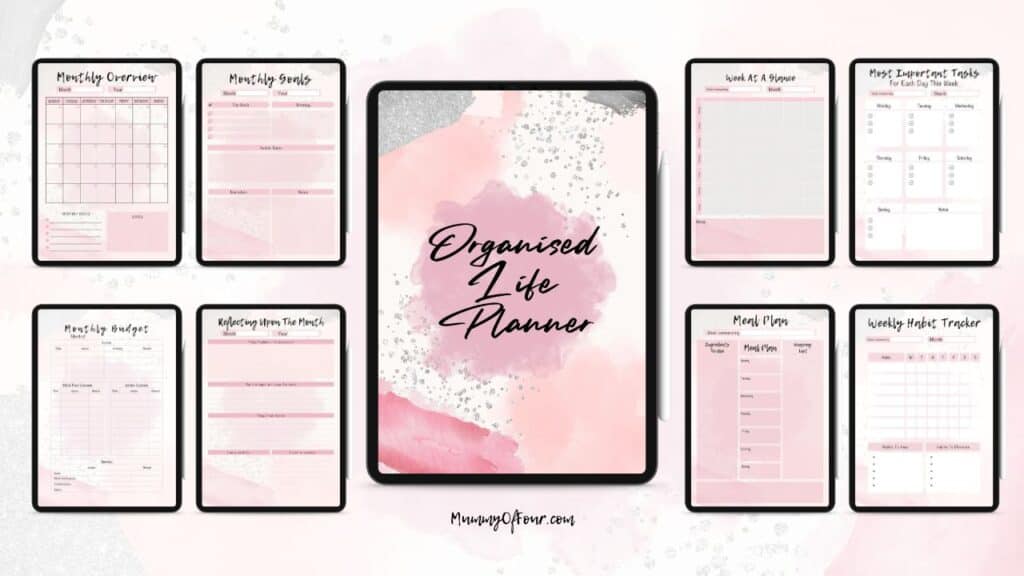
My Planner
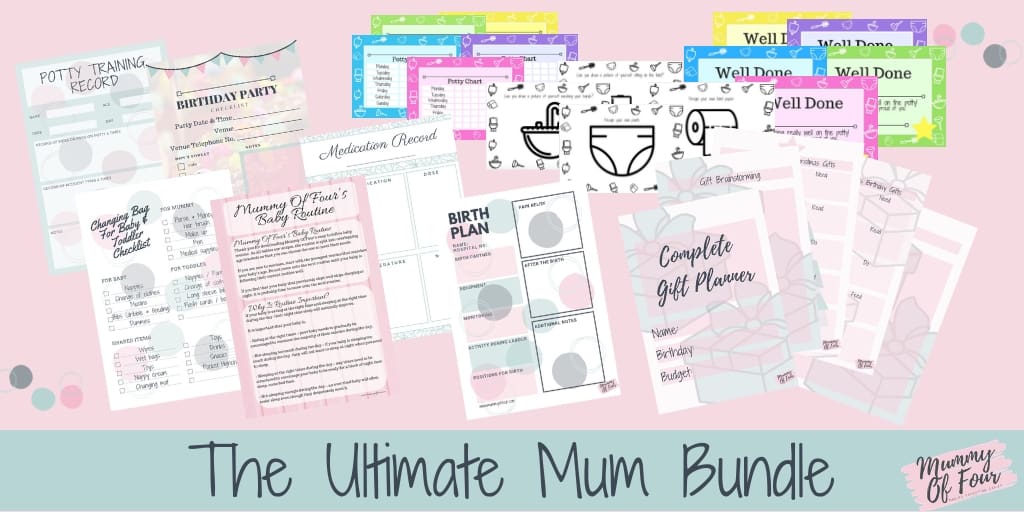
Get The Ultimate Mum Bundle Now
Join my email club and get your hands on my free “Ultimate Mum Bundle” of organisation printables.
Read It Next
